

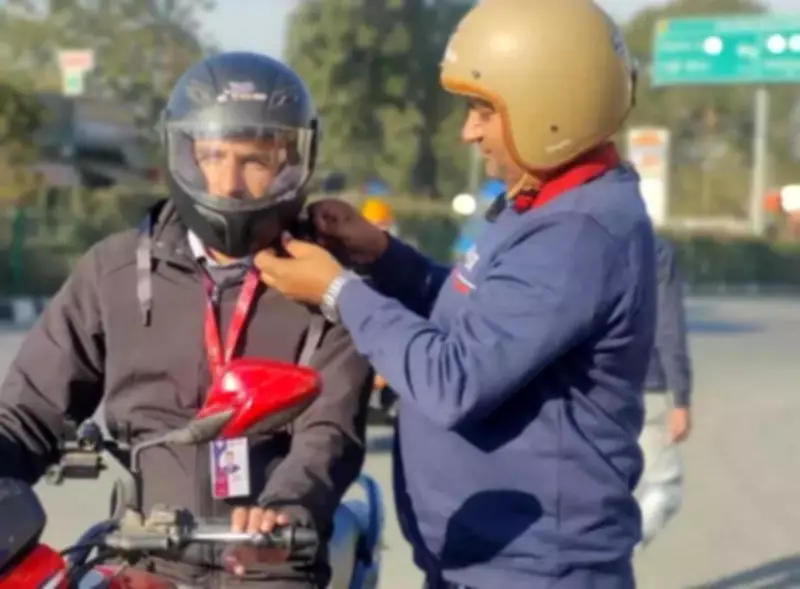
NEW DELHI: Standard helmets and seatbelts could have saved thousands of lives in 2024, according to a report by the road transport ministry. Over 40% of the 81,780 two-wheeler riders killed in road crashes could have survived had they worn good-quality helmets, while seat belts could have prevented about half of the 21,988 deaths among car occupants.
Global Studies Highlight Effectiveness
As per a UN Motorcycle Helmet Study, motorcyclists are 26 times more likely to die in road crashes than drivers of cars. Wearing an appropriate helmet improves their chances of survival by 42% and helps avoid 69% of injuries to riders. Similarly, according to the World Health Organisation, seat-belts are approximately 50% effective in preventing fatalities in crashes where motorists would otherwise die.
State-Wise Data
The road transport ministry’s report, based on data from state police departments, shows Tamil Nadu recorded a maximum of 7,744 deaths due to non-wearing of helmets, followed by Maharashtra (5,946) and Madhya Pradesh (5,543). In cases of fatalities attributed to non-wearing of seatbelts, Uttar Pradesh reported the maximum 2,816 deaths, followed by Madhya Pradesh (1,929) and Maharashtra (1,427).

Expert Opinions
Trauma care experts agreed that proper wearing of standard helmets and seatbelts has the potential to prevent a large share of road fatalities, based on global experience. However, there has been no India-specific study so far. “There are multiple reasons for crashes. There have been several instances of limb loss because of rash driving by two-wheeler drivers. We can get the exact cause of crashes and fatalities when every hospital has a trauma registry. The work has started after a recent Supreme Court order,” said a senior trauma care surgeon at JPNA Trauma Center in Delhi.
Road safety expert Rohit Baluja said that unfortunately, crash data in India remains largely descriptive rather than diagnostic. He added, “Most crashes continue to be attributed to driver error or weather conditions, while critical contributory factors relating to road design, traffic engineering deficiencies, vehicle factors, enforcement practices, and post-crash response are seldom scientifically investigated or recorded.”
Other Causes of Fatalities
While not wearing safety gear and other causes of fatal crashes, including speeding and wrong side driving, are related to road user behavior, the road transport ministry’s report also reveals how increasing negligence of road owning agencies has pushed up the total number of deaths. For example, fatalities due to potholes went up to 2,384 in 2024, a rise of 10.4% over 2023, and fatalities at under construction sites stood at 5,389, a spike of 19.4% over the previous year.
Pedestrians and Two-Wheeler Riders at Risk
The report also shows that nearly 67% — or two out of every three people killed on Indian roads in 2024 — were two-wheeler riders or pedestrians. In absolute numbers, a total of 1.28 lakh two-wheeler riders and pedestrians lost their lives in road crashes. This number is higher than the data published by the National Crime Records Bureau (NCRB), which released its report more than a month ago. The NCRB report recorded nearly 1.1 lakh fatalities among pedestrians and two-wheeler riders in 2024.
Need for Trauma Registry
On trauma registry in hospitals, Dr Amit Gupta from AIIMS Trauma Centre — who has been involved with ad hoc research projects funded by the Department of Science and Technology and ICMR — said that processes and funding need to be institutionalized so that robust and tangible data can be extracted from hospitals treating trauma victims. “This requires minimal funding, training of data collectors and nodal officers, and a national agency based out of Apex Trauma Centre (AIIMS) which can analyze, interpret, and propose methodologies to reduce the trauma burden in the country,” he said.






