

Bangladesh's Hindu Mahajote Seeks to Capitalize on Political Vacuum in Key Constituency
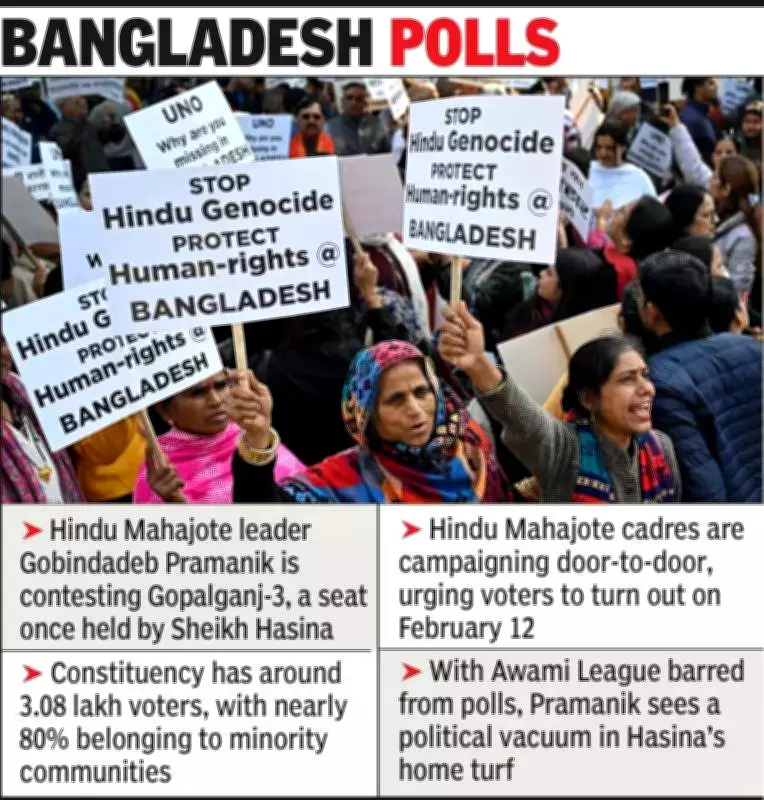
As Bangladesh gears up for the crucial February 12 elections, Gobindadeb Pramanik, the general secretary of the Bangladesh Jatiya Hindu Mahajote, is making a determined bid to secure the Gopalganj-3 parliamentary seat. This constituency was previously held by the ousted Prime Minister Sheikh Hasina, and Pramanik believes his organization can fill the political void left by the Awami League's exclusion from the polls.
Strategic Focus on Minority Voter Consolidation
The Gopalganj-3 constituency boasts an electorate of approximately 3.08 lakh voters, with nearly 80% belonging to minority communities. Pramanik has emphasized that consolidating these votes is central to his campaign strategy. However, he has highlighted that ensuring the safety of minority voters on polling day remains the most significant challenge.
Gopalganj holds immense historical significance as the birthplace of Sheikh Mujibur Rahman, the founding leader of Bangladesh and father of Sheikh Hasina. With the Awami League barred from participating, Pramanik sees a unique opportunity for the Hindu Mahajote to step in and represent the interests of minority voters who feel politically marginalized.

Allegations of Voter Intimidation and Safety Concerns
In an interview from Gopalganj, Pramanik made serious allegations against workers of the Bangladesh Nationalist Party (BNP). He claimed that BNP activists are moving across the constituency and threatening minority voters, warning them against going to polling centers. This, he argues, is part of a broader pattern of violence and intimidation targeting minorities across Bangladesh.
"Violence against minorities continues to be a major deterrent to voter turnout," Pramanik stated. "When rival groups issue threats of serious consequences, it creates an atmosphere of fear that suppresses democratic participation."
In response, Hindu Mahajote workers are conducting door-to-door campaigns, urging voters not to be intimidated and to exercise their franchise confidently on February 12. This grassroots effort aims to counter the alleged threats and boost voter morale.
Independent Candidacy and Nomination Hurdles
Since the Hindu Mahajote is not a registered political party in Bangladesh, Pramanik is contesting the election as an independent candidate. His path to the ballot was not smooth; his nomination was initially rejected on technical grounds. However, after filing a successful appeal before the Election Commission, his candidacy was cleared, allowing him to proceed with his campaign.
Regional Implications and Diaspora Interest
The developments in Gopalganj are being closely monitored in regions like Gadchiroli and Chhattisgarh in India, where Hindu refugees from erstwhile East Pakistan were resettled. Many in these areas still maintain family ties in Bangladesh and have a vested interest in the political outcomes affecting minority communities there. This cross-border attention underscores the broader significance of the election for diaspora communities and regional observers.
As the election date nears, the focus on Gopalganj-3 highlights the complex dynamics of minority politics in Bangladesh. Pramanik's campaign represents a test of whether minority voters can mobilize effectively in the face of intimidation and whether the Hindu Mahajote can translate its grassroots efforts into electoral success in a historically significant constituency.






