

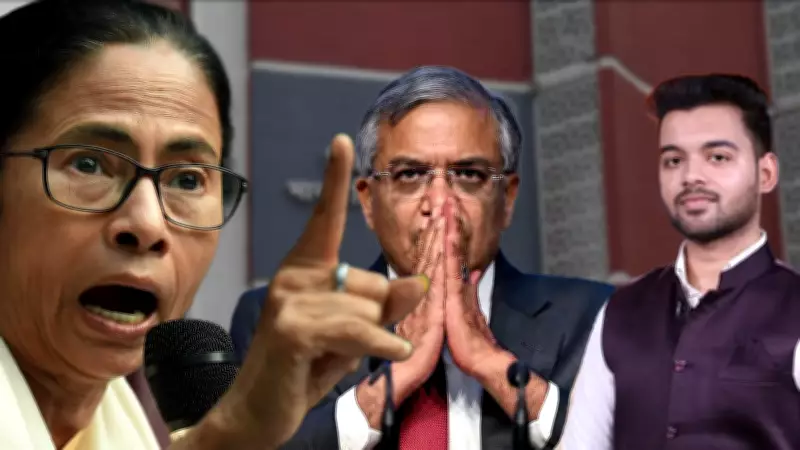
Historic Parliamentary Motion Seeks Removal of Chief Election Commissioner
In an unprecedented move in India's democratic history, opposition parties have formally submitted a motion in Parliament seeking the impeachment of Chief Election Commissioner Gyanesh Kumar. The notice, bearing the signatures of 193 Members of Parliament, represents the first-ever attempt to remove a sitting Chief Election Commissioner through parliamentary proceedings.
Allegations of Partisan Conduct and Electoral Irregularities
The impeachment motion cites serious allegations against Commissioner Kumar, accusing him of partisan conduct and irregularities in voter roll revisions. Opposition leaders have specifically pointed to concerns surrounding the Special Intensive Revision exercise, claiming procedural lapses that could potentially compromise electoral integrity.
This development comes at a crucial juncture in India's electoral calendar, raising fundamental questions about the independence and accountability mechanisms governing the Election Commission of India.

Constitutional Safeguards and Removal Process
The Indian Constitution provides robust protections for the autonomy of the Election Commission. According to Article 324(5), the Chief Election Commissioner can only be removed from office through the same rigorous procedure applicable to Supreme Court judges.
This constitutional provision mandates:
- A special majority vote in the Lok Sabha
- A special majority vote in the Rajya Sabha
- Presentation of proven misbehavior or incapacity
The high constitutional threshold ensures that the Election Commission maintains its independence from political pressures while remaining accountable for its actions.
Political Dynamics and Parliamentary Mathematics
Political analysts note that given the current strength of the ruling coalition in both houses of Parliament, the impeachment motion faces significant procedural hurdles. The requirement for a special majority means the opposition would need to secure substantial cross-party support beyond their existing numbers.
However, observers emphasize that regardless of the motion's eventual outcome, this development has already sparked a national conversation about the delicate balance between institutional independence and democratic accountability.
Broader Implications for Electoral Governance
The unprecedented move to impeach a Chief Election Commissioner raises several critical questions about India's electoral governance framework:
- The effectiveness of existing checks and balances within the Election Commission
- The appropriate mechanisms for addressing concerns about electoral officials' conduct
- The evolving relationship between constitutional bodies and parliamentary oversight
- The precedent this motion might establish for future electoral administration
As parliamentary procedures unfold, this historic motion will likely continue to generate debate about the fundamental principles underpinning India's democratic institutions and their operational independence.






