

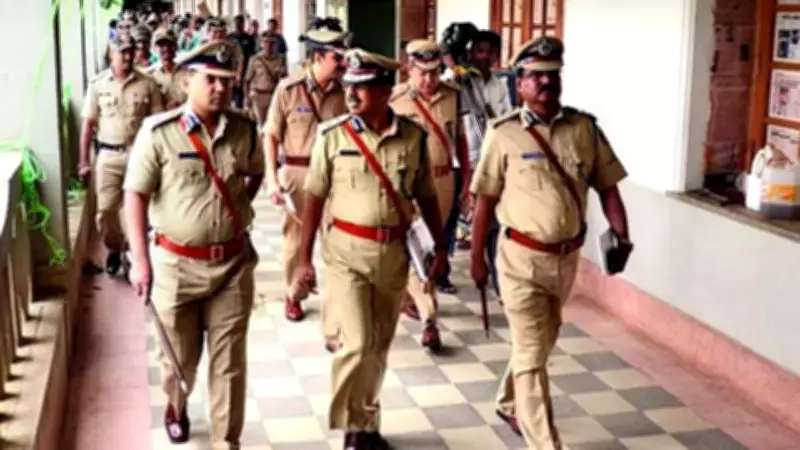
Home Ministry Proposes Bill to Formalize IPS Officer Deputation in Central Armed Police Forces
The Union Home Ministry is preparing to introduce a significant legislative proposal in Parliament aimed at institutionalizing the deputation of Indian Police Service (IPS) officers to the Central Armed Police Forces (CAPFs). This move is designed to bolster operational efficiency and enhance coordination between the central government and state authorities.
Key Provisions of the CAPF (General Administration) Bill, 2026
The draft bill, which received Union cabinet approval on March 11, establishes specific quotas for IPS officer deputation at senior levels within the CAPFs. According to the proposed legislation, a minimum of 50% of Inspector-General (IG) level posts, 67% of Additional Director General (ADG) level posts, and all Director-General (DG) and Special DG-level positions will be reserved for IPS officers on deputation.
This bill effectively counters a Supreme Court ruling from May 2025 that granted 'Organised Services' (OGAS) status to Group A CAPF officers. That judicial directive had mandated the government to progressively reduce deputation posts for IPS officers in the Senior Administrative Grade (SAG) up to the IG rank. The new legislation seeks to override that order by formalizing and expanding the deputation framework.

Rationale Behind the Legislative Push
The statement of objects and reasons accompanying the bill highlights several critical factors driving this initiative. It notes that the recruitment and service conditions for Group A General Duty officers and other CAPF personnel are currently governed by executive orders, leading to fragmented regulatory provisions.
"In recent years, due to absence of an umbrella law, regulatory provisions have evolved in a fragmented manner, resulting in several litigation on service-related matters and leading to some functional and administrative difficulties," the document explains.
The bill emphasizes that CAPFs perform vital national security and anti-insurgency duties that require seamless coordination with state authorities. "In the interest of maintaining Centre-state relations by ensuring close coordination between the Union and the states for effective operational functioning, it is essential to maintain the existing system of deputation of the IPS officers in CAPFs," it asserts.
Changes to Current Deputation Structure
Under existing recruitment rules, 20% of Deputy Inspector-General (DIG) level posts and 50% of IG level posts are designated as deputation positions for IPS officers. The new bill notably eliminates the 20% deputation quota for DIG-level posts while strengthening quotas at higher ranks.
This legislative approach addresses concerns from approximately 13,000 CAPF cadre officers who have historically expressed dissatisfaction with IPS officers occupying senior positions, viewing it as discriminatory to their career advancement opportunities. The Supreme Court's 2025 ruling was widely perceived as a potential career boost for these officers.
Broader Implications and Context
The CAPF (General Administration) Bill represents a comprehensive effort to create unified legislation governing recruitment, deputation, promotion, and service conditions for Group A general duty officers and other CAPF personnel. By establishing clear statutory guidelines, the government aims to reduce litigation, provide legislative clarity, and harmonize judicial directives with administrative and federal requirements.
This development underscores the ongoing tension between cadre officers within CAPFs and deputationists from the IPS, while highlighting the government's priority on maintaining operational effectiveness through experienced leadership familiar with both central and state policing dynamics.






