

In her landmark study, 'Why Electoral Integrity Matters', political scientist Pippa Norris offers a foundational insight into what makes elections legitimate. An election, she argues, is not a single event but a sequential chain — 11 links, stretching from drawing of constituency boundaries and compilation of voter rolls, through campaign conduct, to counting of ballots and acceptance of results.
The Fragile Chain of Electoral Integrity
Violate standards at any one link, and the chain weakens. But Norris identifies something even more corrosive than individual violations. When rules of the electoral game are set unilaterally by the very actors who stand to gain from them, the entire premise of democratic competition collapses. Elections cease being the mechanism by which power is contested and become the mechanism by which power becomes entrenched.
India's Failing Test
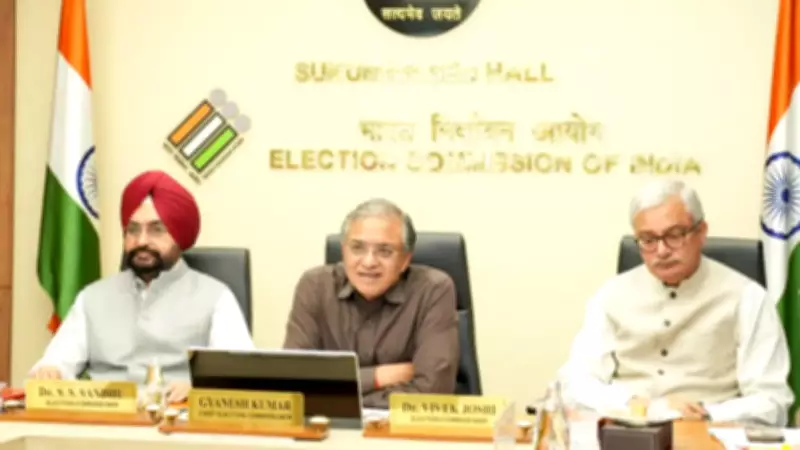
Today, India is failing this test, not only in the conduct of elections but in its architecture as well. The Election Commission, tasked with ensuring free and fair polls, has increasingly been perceived as acting in favor of the ruling party. This perception damages faith in Indian democracy, as the institution meant to be an impartial arbiter is seen as compromised.

The commission's decisions on matters such as model code of conduct enforcement, electronic voting machine security, and voter list revisions have raised concerns. Critics argue that these actions undermine the credibility of the electoral process, making it harder for opposition parties to compete on a level playing field.
Norris's framework highlights that electoral integrity requires adherence to standards across all stages. When the rule-setting body itself is biased, the entire democratic process suffers. For India, restoring faith in the Election Commission is crucial to preserving the legitimacy of its democracy.






