The People's Flag: A Democratic Transformation of India's Tricolour
The extraordinary transformation of the Indian national flag from a state-controlled emblem into a citizen's constitutional right represents a gradual yet profoundly democratic process. This journey, marked by legal contests and civic engagement, reflects the evolution of India's democratic imagination.
Historical Origins and Early Struggles
India's tryst with the tricolour officially began on July 22, 1947, when the nation received its national flag. The struggle for independence imbued the flag with new symbolic meaning, yet post-independence, it was often viewed as a revered but distant symbol rather than a living civic right. The Constituent Assembly and freedom movement leaders recognised the flag as a non-partisan national symbol of constitutional belonging, but access remained limited for ordinary citizens.
The idea of a national flag for India has deep historical roots, embodying collective struggles for freedom through shared sacrifices and patriotic values. It evolved through public debates, manifesting in various forms from Sister Nivedita's Vajra Flag to the modern tricolour. However, for decades, the Flag Code of India and prevailing laws sustained a culture of government control, where patriotism was often ceremonial and ritualistic, limiting civic consciousness and democratic participation.

The Legal Battle for Civic Freedom
The pivotal moment in this democratisation came through the tenacity of Naveen Jindal. On January 26, 1993, Jindal hoisted the Indian flag at the Jindal Strips factory as an act of national pride, only to face government officials insisting it be taken down due to violations of the Flag Code, which restricted private displays to specific national days. Having proudly displayed the flag daily as a student government president at the University of Texas, Dallas, Jindal could not accept this restriction.
Convinced that it violated his fundamental right to free speech and expression under Article 19(1)(a) of the Constitution, he filed a writ petition in the Delhi High Court on September 22, 1995. The High Court ruled that the Flag Code could not legally restrict citizens from flying the national flag year-round, a decision the Government of India appealed. After years of adjournments and hearings, the Supreme Court delivered a landmark judgment on January 23, 2004, in Union of India v. Naveen Jindal, upholding the High Court's decision and recognising the right to fly the flag as part of the freedom of speech and expression.
Milestones and Democratic Progress
January 23, 2026, marks the 22nd anniversary of this Supreme Court judgment, a date that stands at the confluence of history, law, legislative process, and civic engagement. Last year also commemorated two key milestones: the 30th anniversary of the Delhi High Court judgment and the 20th anniversary of parliamentary amendments to the Prevention of Insults to National Honour Act, 1971, which enabled citizens to respectfully display the flag in clothing and apparel.
This legal recognition sparked further democratisation efforts. Naveen Jindal and Shallu Jindal established the Flag Foundation of India, dedicated to connecting the national flag with people across the country. This year, the Foundation celebrates installing 200 monumental national flags across India, symbolising the flag's integration into public life.
From Symbol to Shared Inheritance
The journey from Sister Nivedita's Vajra Flag to Naveen Jindal's legal battle reflects a remarkable continuity in India's democratic ethos. In 1947, Hansa Mehta presented the tricolour as a tribute to women's contributions to the Constitution-making process, recognising it as a symbol of equality and inclusion. Decades later, Jindal drew inspiration from this vision to make the flag a living part of India's democratic identity.
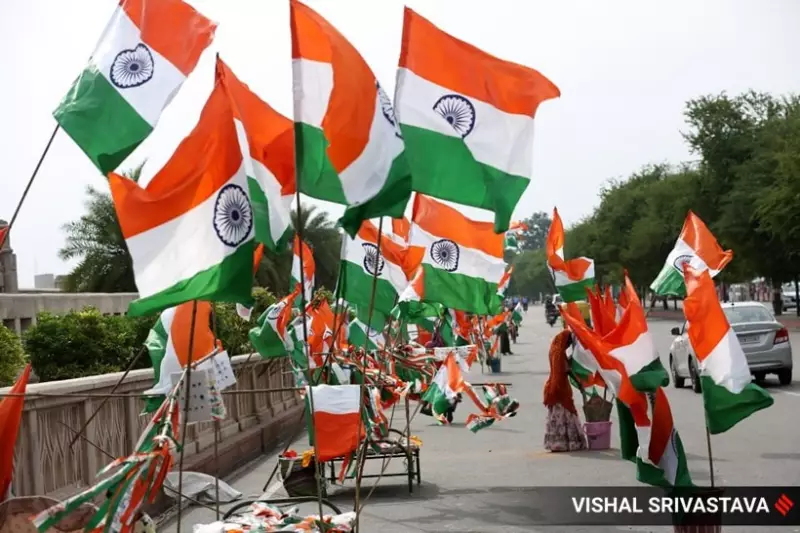
Flying the national flag is now an act of civic responsibility, embodying Dhvaja Upasana—a reverential resolve that national symbols must live within the people. It reminds citizens of constitutional duties and obligations, fostering nation-building. The flag has transitioned from a state-controlled object to a shared constitutional inheritance, binding citizens through rights, responsibilities, and democratic participation.

This transformation underscores that a democracy must not guard its symbols too restrictively, risking alienation. Instead, by making the flag accessible, India has empowered its citizenry, ensuring the tricolour remains a vibrant and meaningful emblem of the nation's democratic journey.