

The Unseen Force: How Independent Candidates Shape Tamil Nadu's Electoral Landscape
Independent candidates occupy a unique and often misunderstood position in India's electoral democracy. While they rarely secure victory, their presence significantly influences election outcomes, voter behavior, and political discourse. In Tamil Nadu's vibrant political arena, these candidates have evolved into a distinct phenomenon that deserves closer examination.
The Mathematics of Many: When Numbers Tell a Story
The sheer volume of independent candidates in Tamil Nadu elections creates a fascinating statistical landscape. In Karur, one of the most crowded constituencies in the 2026 Tamil Nadu assembly election, eight out of every ten candidates are independents. This translates to 84 independent candidates among 102 total contenders. Chennai constituencies like Kolathur and Perambur present similar patterns, with approximately 30 independent candidates each.
Economist Arvind Magesan, who conducted a comprehensive study of independent candidates in Lok Sabha elections, explains their significance: "Independent candidates can sometimes divert votes away from front-running parties and bring out voters who may not have voted otherwise." He further notes that "voting for independents is also sometimes a form of protest, similar to NOTA. They may not win, but they matter to the process."

Historical Precedents: When Independents Forced Systemic Change
Tamil Nadu has experienced the profound impact of independent candidates before. In 1996, the Modakurichi constituency in Erode district recorded an astonishing 1,033 candidates, most of them independents fielded by a farmers' federation. This unprecedented situation forced the Election Commission to postpone polling entirely. The incident led to significant policy changes, including raising the election deposit from Rs 250 to Rs 10,000 to discourage frivolous candidatures.
Profiles in Persistence: The Many Faces of Independent Candidates
The Persistent Campaigner
Since 1998, 'Election King' K Padmarajan from Mettur has contested and lost 254 elections, ranging from local body elections to Lok Sabha polls. He has challenged political heavyweights including M Karunanidhi, J Jayalalithaa, and Narendra Modi. Despite knowing he will never win, Padmarajan continues his quest. "I contest to remind people we live in a democracy where every citizen has the freedom to stand in an election," says the tyre shop owner who has lost approximately Rs 1 crore in election deposits.
Close behind is Noor Mohammed, a 68-year-old transport operator from Coimbatore who has contested more than 50 elections. Despite family objections and occasional nomination rejections, Mohammed remains undeterred. "If our freedom fighters had not stood up to the British, we would not be a free nation today. If I don't stand up to a corrupt government, we will never be free of it," he declares.
The Urban Professional
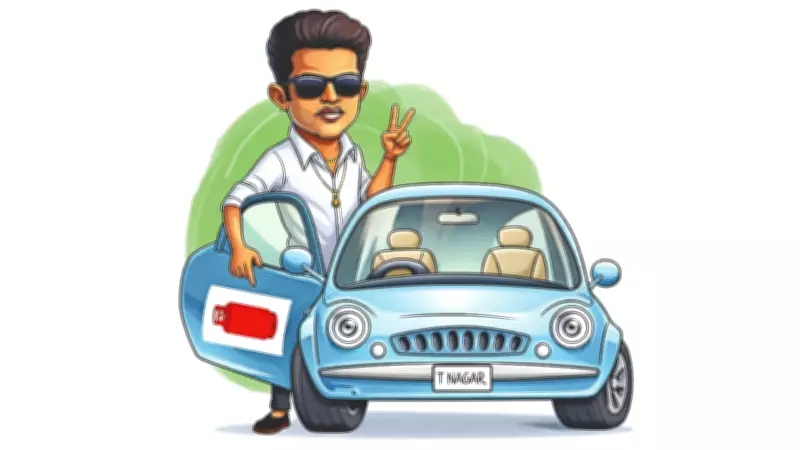
S Badri, a 40-plus engineer-turned-entrepreneur contesting from T Nagar, represents a different breed of independent candidate. As president of a residents' association, he positions himself as a bridge between citizens and government, focusing specifically on civic and urban issues. "Most governments focus only on welfare schemes. What about the rest of us?" he questions. His campaign relies heavily on social media and targeted neighborhood drives, with his chosen symbol—the LPG cylinder—gaining attention due to recent shortages.
The Strategic Disruptor
Some independent candidates serve as strategic disruptors in closely contested elections. In Coimbatore South, the entry of 18 candidates from Karur district has raised eyebrows, with rival parties alleging they were brought in to benefit DMK leader V Senthilbalaji by increasing the number of booth agents on the ground. The Election Commission allows each candidate two agents, and officials maintain there is no irregularity in such strategic placements.

Name-based confusion adds another layer to this phenomenon. In Coimbatore South, five candidates named Senthil are contesting, while in Perambur, TVK founder Joseph Vijay faces two other Vijays and multiple Josephs. Similar patterns emerge in Thuraiyur with numerous Sarojas and Mannargudi with multiple Kamarajs.
The Dramatic Performer
Some independent candidates turn nomination filing into theatrical productions. In Namakkal, yoga teacher 'Gandhian' Ramesh arrived with a CCTV camera strapped to his head, a toy gun in one hand, and a Gandhi-style walking stick in the other. "I want to enforce a rule where cameras are embedded in MLAs' IDs. We need transparency in government," he explains, while advocating for women's gun licenses.
In Coimbatore, Noor Mohammed made his entrance on a bullock cart with a mud pot on his head, symbolizing how "selling your votes is like performing your own final rites." Meanwhile, 27-year-old Mohanraj paid his election deposit in Tirupattur with a basket of 10-rupee coins, declaring "I want to tell people that anyone can stand."
The Rare Success Story
Occasionally, independent candidates achieve what seems impossible. T Ramachandran from Thalli constituency made history in 2006 by winning as an independent in the Tamil Nadu assembly election. Petty shop owner K Jeya from Madurai came remarkably close in 2011, securing 6,500 votes, though she admits some votes might have resulted from symbol confusion with Vijayakant's DMDK party.
Despite subsequent electoral setbacks, Jeya remains optimistic with her current electric pole symbol, hoping to secure 12,000 votes. "God is still great," she maintains, embodying the resilient spirit that defines many independent candidates.
The Broader Impact: Beyond Winning and Losing
Independent candidates serve multiple functions in Tamil Nadu's electoral ecosystem. They provide protest voting options for dissatisfied citizens, highlight neglected issues, test democratic principles, and occasionally force mainstream parties to address concerns they might otherwise ignore. While their victory rate remains minimal, their cumulative impact on voter turnout, political discourse, and democratic participation cannot be underestimated.
As Tamil Nadu continues to evolve politically, independent candidates will likely remain a distinctive feature of its electoral landscape—reminding all participants that democracy extends beyond party politics and that every voice, however unconventional, deserves consideration in the public square.





