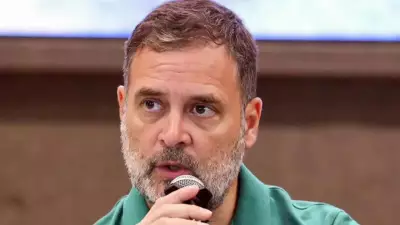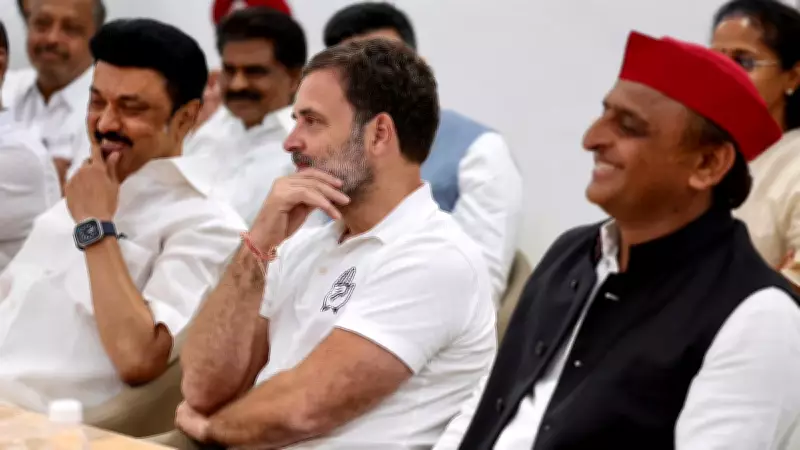
The Bharatiya Janata Party (BJP) on Thursday declared that the I.N.D.I.A. opposition bloc is effectively dead and exists only on paper, following the decision of the Dravida Munnetra Kazhagam (DMK) to boycott the alliance. Speaking to reporters, BJP leader and spokesperson Poonawalla alleged that the alliance is driven by political opportunism rather than any common objective or ideology.
DMK boycott and its impact
The DMK, a key constituent of the Indian National Developmental Inclusive Alliance (I.N.D.I.A.), announced its withdrawal from the bloc earlier this week, citing irreconcilable differences over seat-sharing and policy direction. This move has dealt a severe blow to the already fragile coalition, which was formed ahead of the 2024 general elections to challenge the ruling National Democratic Alliance (NDA). Poonawalla stated, "The I.N.D.I.A. bloc was never a cohesive entity. It was a marriage of convenience for parties that had nothing in common except their hatred for Prime Minister Narendra Modi. Now, with the DMK walking out, the mask has fallen off."
Opportunism over ideology
The BJP leader further criticized the alliance partners for prioritizing their regional and personal interests over national issues. He pointed out that the DMK's exit exposes the inherent contradictions within the bloc, which includes parties as diverse as the Congress, Samajwadi Party, and Trinamool Congress. "Each party is only interested in its own survival and expansion. There is no shared vision for the country. The I.N.D.I.A. bloc is dead and buried, and it exists only on paper now," Poonawalla added.

Congress and other allies react
The Congress party, which has been the largest constituent of the I.N.D.I.A. bloc, expressed disappointment over the DMK's decision but maintained that the alliance would continue. However, political analysts suggest that the DMK's boycott could trigger a domino effect, with other regional parties reconsidering their participation. The Samajwadi Party, another key ally, has remained non-committal, while the Trinamool Congress has been vocal about its differences with the Congress leadership.
Poonawalla's remarks come amid growing tensions within the opposition camp, with several parties accusing each other of undermining the alliance's unity. The BJP, which has consistently targeted the I.N.D.I.A. bloc as a 'gimmick', has seized upon the DMK's exit to further its narrative that the opposition is fragmented and incapable of providing a stable alternative to the NDA.
Political implications
The development is seen as a significant boost for the BJP ahead of the upcoming state elections in Tamil Nadu, where the DMK and its allies are in power. The BJP has been making concerted efforts to expand its footprint in the state, and the DMK's isolation from the national opposition could work to the ruling party's advantage. Poonawalla concluded, "The people of India have rejected the I.N.D.I.A. bloc's negative politics. The DMK's departure is just the beginning. More parties will realize that this alliance has no future."