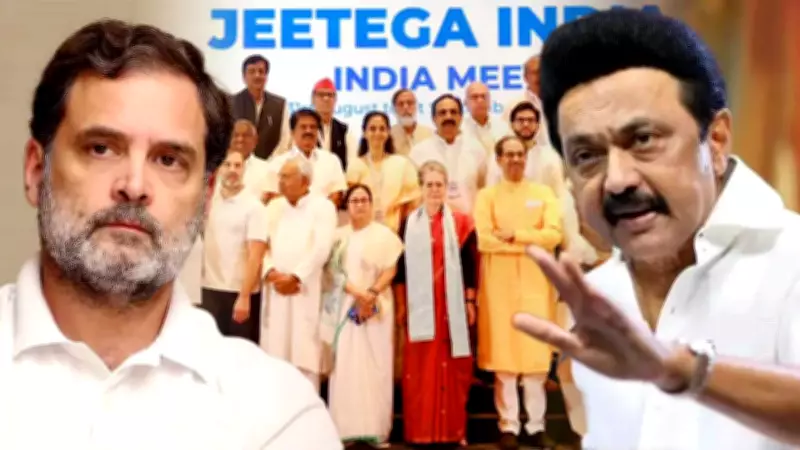
The INDIA bloc, a coalition of opposition parties formed to challenge the ruling National Democratic Alliance, is facing mounting challenges as key allies struggle with internal divisions and political disagreements. The alliance, which once projected a united front, is now witnessing significant cracks that threaten its very survival.
Growing Rifts Among Key Allies
The DMK's growing rift with the Congress has become a major point of contention. The regional party from Tamil Nadu has expressed dissatisfaction with the Congress's leadership and decision-making, leading to strained relations. Additionally, a major rebellion within the Trinamool Congress has further weakened the bloc's cohesion. The party, led by Mamata Banerjee, is grappling with internal dissent, which has distracted from the alliance's collective goals.
The Aam Aadmi Party (AAP) has also been distancing itself from the INDIA bloc, citing ideological differences and strategic considerations. AAP's leadership has indicated that it may prioritize its own regional agenda over the alliance's national objectives, raising questions about the bloc's ability to maintain unity.

Leadership Vacuum and Strategic Challenges
Political observers say the alliance's biggest challenge remains the absence of a universally accepted leader and a cohesive strategy capable of keeping diverse regional partners together. While several opposition leaders have been proposed as potential faces of the bloc, none have garnered widespread support. This leadership vacuum has made it difficult to coordinate policies and present a unified alternative to the ruling party.
The developments come ahead of a crucial INDIA bloc meeting in Delhi, where parties are expected to discuss their roadmap for upcoming elections. However, with growing discord, the meeting is likely to be fraught with tension and difficult negotiations.
Impact on Opposition Unity
The splits and exits within the INDIA bloc have raised concerns about the broader opposition unity. Analysts warn that if the alliance fails to resolve its internal conflicts, it could hand a significant advantage to the ruling party in future electoral battles. The bloc's ability to counter the government's policies and present a credible alternative hinges on its ability to address these challenges swiftly.
As the INDIA bloc navigates this turbulent phase, all eyes are on the upcoming meeting to see whether the alliance can overcome its differences or whether further fragmentation is inevitable.