

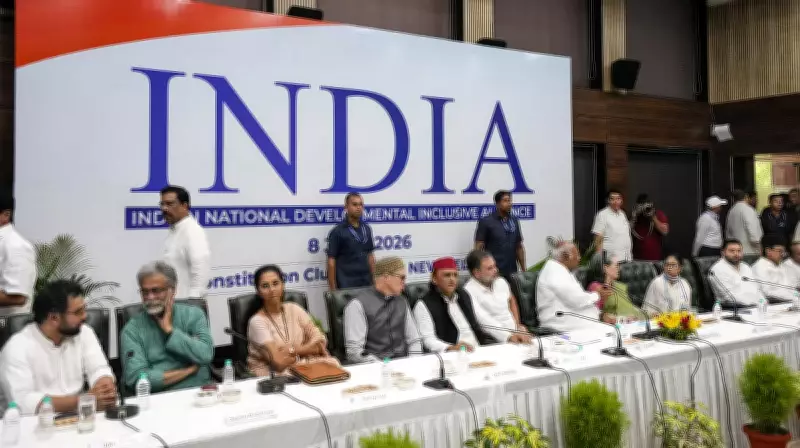
Leaders of the Indian National Democratic Inclusive Alliance (I.N.D.I.A.) bloc on Monday stressed the urgent need to safeguard democratic values as their crucial meeting got underway in the national capital. The opposition coalition, comprising several major parties, convened to strategize and address key political challenges facing the nation.
Emphasis on Democratic Principles
Arriving for the meeting, several senior leaders indicated that discussions on contentious matters would take place during the deliberations. The primary focus, they stated, would be on reinforcing democratic institutions and ensuring that the voice of the people is not suppressed. Leaders from various parties echoed the sentiment that unity among opposition forces is essential to protect the constitutional framework.
Key Leaders in Attendance
The meeting saw the presence of prominent figures including former Congress president Rahul Gandhi, Nationalist Congress Party (NCP) chief Sharad Pawar, and Trinamool Congress (TMC) leader Mamata Banerjee, among others. Each leader underscored the importance of collective action against what they termed as the erosion of democratic norms.

- Rahul Gandhi called for a united front to challenge the ruling party's policies.
- Sharad Pawar emphasized the need for dialogue and consensus-building.
- Mamata Banerjee highlighted the threats to federalism and state autonomy.
Agenda and Expected Outcomes
The agenda for the meeting includes discussions on electoral strategies, legislative priorities, and a common minimum program. Leaders are expected to finalize a joint declaration outlining their commitment to democratic values, social justice, and economic equity. The bloc also aims to coordinate efforts for upcoming state elections and the next general election.
Political analysts view this meeting as a critical step towards opposition consolidation. The I.N.D.I.A. bloc, formed last year, has been working to present a cohesive alternative to the current government. However, internal differences on certain issues have occasionally surfaced, making this meeting particularly significant.
Reactions and Criticism
The ruling party has dismissed the meeting as a gathering of desperate politicians with no clear agenda. In response, opposition leaders reiterated that their primary goal is to serve the people and uphold the Constitution. They accused the government of undermining parliamentary democracy and centralizing power.
As the meeting proceeds, all eyes are on the resolutions that will emerge. The bloc's ability to present a unified stance will be crucial in shaping the political landscape in the coming months.






