

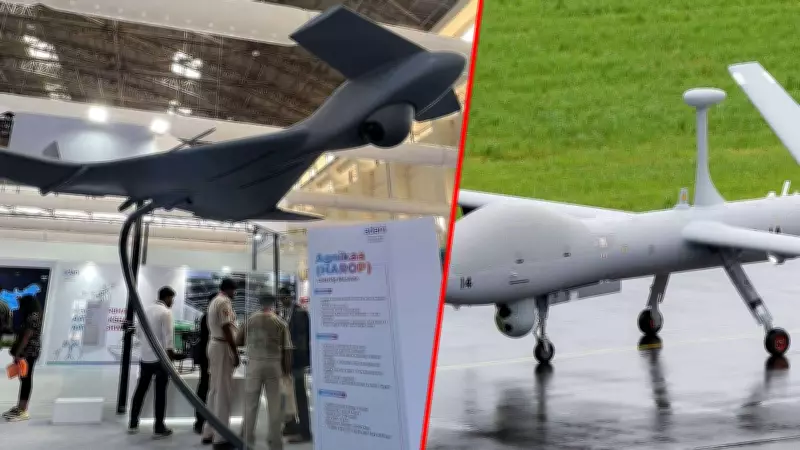
India Approves Strike Drone Squadrons for Air Force, Citing Iran War Lessons
India is embarking on a profound transformation of its military strategy, decisively positioning unmanned systems at the core of its future warfare capabilities. The Defence Acquisition Council has granted approval for the acquisition of multiple squadrons of Remotely Piloted Strike Aircraft, a move that signals a fundamental doctrinal shift. This initiative redefines drones from their traditional role as support assets to becoming primary combat platforms within the Indian Air Force's arsenal.
Learning from Modern Battlefield Realities
The council's decision is deeply informed by critical lessons observed in recent international conflicts, including the war in Iran. These engagements have vividly demonstrated the formidable capabilities of unmanned aerial systems to deliver exceptionally high-impact operational results while maintaining relatively low financial and human costs. Analysts have noted how drone technology has successfully targeted enemy logistics chains, degraded critical infrastructure, and even overwhelmed sophisticated air defence networks through innovative swarm tactics.
This technological evolution has fundamentally challenged traditional assumptions about air power superiority and battlefield dominance. The demonstrated effectiveness of unmanned platforms in contested environments has compelled military strategists worldwide to reconsider established combat paradigms.

Transition to Remote Warfare Capabilities
India's approval of strike drone squadrons represents a strategic transition toward remote warfare methodologies. This approach enables the execution of complex combat missions without exposing human pilots to direct physical risk. The envisioned systems are designed to operate as integral components within a sophisticated networked architecture.
These advanced platforms will maintain seamless connectivity with satellites, ground-based radar installations, and manned aircraft, creating an integrated combat ecosystem that facilitates accelerated decision-making cycles and enables precision engagement against diverse targets.
Alignment with Indigenous Defense Programs
This development synchronizes effectively with India's ongoing indigenous defense initiatives, particularly the ambitious Ghatak Unmanned Combat Aerial Vehicle program. The Ghatak UCAV project aims to deliver advanced stealth strike capabilities, representing a significant milestone in India's pursuit of defense self-reliance and technological sovereignty.
The strategic approval of strike drone squadrons underscores several key military priorities:
- Enhancing combat effectiveness through unmanned system integration
- Reducing operational risks to military personnel
- Developing cost-efficient force multiplication capabilities
- Strengthening India's deterrent posture in regional security dynamics
- Accelerating the modernization of aerial combat platforms
This decision reflects a comprehensive assessment of evolving global security challenges and represents a calculated investment in next-generation warfare capabilities. As unmanned systems continue to redefine combat parameters internationally, India's strategic embrace of this technology positions its air force for enhanced operational flexibility and tactical advantage in future security scenarios.






