

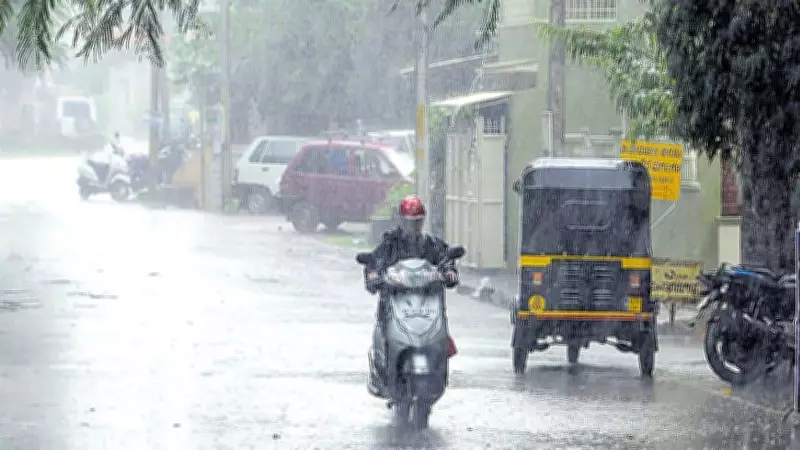
The India Meteorological Department (IMD) has forecast that the country is likely to receive 90% of the long-period average (LPA) rainfall during the upcoming monsoon season. This prediction has raised concerns about potential drought conditions in several regions, particularly in the northwest and central parts of the country.
Monsoon Forecast Details
According to the IMD, the southwest monsoon is expected to be below normal, with a rainfall deficit of 10% compared to the LPA. The LPA for the monsoon season (June to September) is 89 cm based on data from 1961 to 2010. The forecast indicates that the monsoon rainfall is likely to be 90% of the LPA, with a model error of plus or minus 5%.
The IMD also noted that there is a 44% probability of below-normal rainfall, a 29% probability of normal rainfall, and a 27% probability of above-normal rainfall. The forecast is based on a combination of statistical and dynamical models, as well as global climate factors such as El Nino and Indian Ocean Dipole (IOD) conditions.

Regional Variations
The rainfall distribution is expected to vary across different regions. The northwest and central parts of India are likely to receive below-normal rainfall, which could impact agriculture and water resources. In contrast, the southern peninsula and northeastern regions may experience near-normal to above-normal rainfall.
The IMD has advised farmers and policymakers to prepare for potential dry spells and take necessary measures to mitigate the impact on crops. The government has also been urged to monitor the situation closely and implement contingency plans in case of drought.
Impact on Agriculture
Agriculture in India heavily depends on monsoon rains, as about 55% of the country's farmland is rain-fed. A below-normal monsoon could affect the sowing and yield of kharif crops such as rice, sugarcane, cotton, and pulses. The IMD's forecast has already led to concerns among farmers, who are hoping for timely interventions by the government.
Experts suggest that the use of drought-resistant crop varieties and efficient water management practices could help mitigate the impact. The government may also need to ensure adequate availability of seeds, fertilizers, and other inputs to support farmers during the season.
Global Factors Influencing Monsoon
The IMD's forecast takes into account several global climate phenomena. El Nino conditions, which typically suppress monsoon rainfall, are currently neutral but may develop later in the season. The Indian Ocean Dipole (IOD) is expected to be neutral during the early part of the monsoon, but may turn positive later, which could enhance rainfall.
Other factors such as the snow cover over the Himalayas and the Arctic Oscillation also play a role in determining monsoon strength. The IMD will issue updated forecasts in May and June as more data becomes available.
Preparedness and Recommendations
Given the forecast of below-normal rainfall, the IMD has recommended that states and union territories prepare for potential drought conditions. This includes ensuring adequate water storage, implementing water conservation measures, and providing timely advisories to farmers.
The government has also been advised to keep a close watch on the monsoon progress and be ready to declare drought in affected areas if necessary. The IMD will continue to monitor the situation and provide regular updates to help stakeholders make informed decisions.






