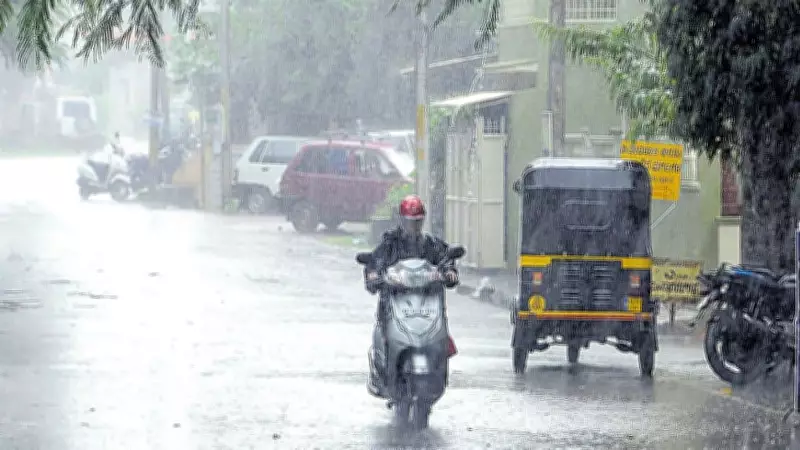
The India Meteorological Department (IMD) has released its preliminary forecast for the upcoming monsoon season, indicating that the country may receive approximately 90% of the Long Period Average (LPA) rainfall. This projection has significant implications for agriculture, water management, and the overall economy, as the monsoon is crucial for India's rain-fed farming sector.
Understanding the Long Period Average (LPA)
The LPA is a benchmark used by the IMD to compare annual rainfall with historical averages. For the period 1961-2010, the LPA for the entire country is 88 cm. A deviation of less than 10% from the LPA is considered normal. Therefore, a 90% rainfall would mean about 79.2 cm of rain, which falls within the normal range but on the lower side.
Potential Impact on Agriculture
Agriculture in India heavily depends on the monsoon, with about 55% of the country's arable land relying on rainfall. A deficit of 10% could affect crop yields, particularly for kharif crops like rice, sugarcane, and pulses. The IMD's forecast suggests that farmers might need to adopt water-saving techniques and consider drought-resistant crop varieties.

Regional Variations
The forecast also highlights regional disparities. While some parts of the country may experience near-normal rainfall, others, particularly in the northwest and central regions, could see deficits. The IMD will provide more detailed regional forecasts in subsequent updates.
Climate Change Concerns
Experts point out that changing climate patterns could lead to more erratic monsoons. The IMD's forecast aligns with global climate models that predict increased variability in rainfall. This underscores the need for robust water management policies and investment in irrigation infrastructure.
Government Preparedness
The government is monitoring the situation closely. The Ministry of Agriculture has advised states to prepare contingency plans, including the distribution of drought-resistant seeds and efficient water use. The IMD will continue to update its forecasts as the monsoon approaches.
In conclusion, while a 90% LPA rainfall is not alarmingly low, it warrants careful planning to mitigate potential risks to agriculture and water security. The IMD's forecast serves as a crucial tool for policymakers, farmers, and stakeholders to make informed decisions.