Union Home Minister Amit Shah declared on Monday that India has become "Naxal-free," marking the end of a 55-year insurgency that claimed nearly 1,000 security personnel lives. Speaking in Bastar, Chhattisgarh, Shah promised that the region's five-decade developmental deficit would be repaired in the next three to five years.
Historic Declaration in Bastar
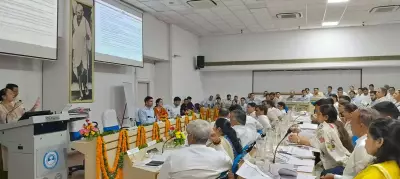
Addressing CAPF personnel, families of martyrs, and surrendered Maoists, Shah said March 31, 2026, was not just the end of armed conflict but the beginning of a new era. "I can say with pride that India is now Naxal-free," he stated, noting that three generations lived through the violence from 1971 to 2026. He added, "India got Independence in 1947, but Bastar got freedom on March 31 this year."
Development Push for Bastar
Shah criticized Maoists for blocking development, saying, "They spread the misconception that development did not happen, so they took up weapons. The truth is development did not happen because they were sitting here with weapons." He promised roads, schools, banks, electricity, and welfare schemes for every tribal village. The home ministry will directly monitor progress, with 70 of Bastar's 200 CAPF camps converted into "Sewa Deras" (welfare hubs) delivering 370 government schemes.

Rehabilitation of Surrendered Maoists
Shah appealed to Bastar society to accept about 3,000 surrendered Naxals, many forced into the movement as children. "It's never too late to return home," he said, emphasizing that around 2,000 surrendered cadres never received formal education. He urged locals to forget bitterness and help reintegrate them into the mainstream.
Operation Black Forest and Other Campaigns
Shah recalled key operations like Black Forest, Prahar, and Octopus that cleared Maoist strongholds across Chhattisgarh, Jharkhand, Bihar, and Telangana. He paid tribute to fallen personnel in major attacks: Tadmetla (76 killed), Ranibodli (55), Manpur (29), Burkapal (25), and Telam (22). He also highlighted the emotional moment when a tribal girl in Netanar said, "Now we are saved."
Future Vision
Shah linked Bastar's development to India's goal of becoming a developed nation by 2047. "Without a developed Bastar, the dream of a developed Bharat will remain incomplete," he said. The Centre and state will collaborate with NDDB to introduce a dairy model, and forest produce will be packaged and marketed via national cooperatives to create employment.
The home minister will chair the 26th central zonal council meeting in Jagdalpur on Tuesday, with chief ministers of Chhattisgarh, Madhya Pradesh, Uttar Pradesh, and Uttarakhand participating.