

India Reacts to Khamenei's Death: Protests and Mourning Sweep Multiple States
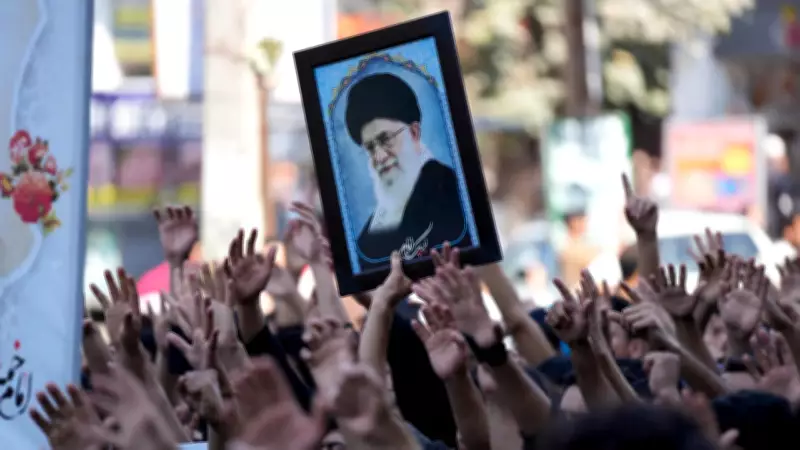
The killing of Iran's Supreme Leader Ali Khamenei in strikes on Sunday sent shockwaves far beyond West Asia, with significant reverberations felt across India. Sections of the Shia community and clerics condemned the death, leading to widespread demonstrations and mourning rituals in various regions.
Protests Erupt in Jammu and Kashmir and Northern India
In Jammu and Kashmir, home to a sizeable Shia population, demonstrations took place in Srinagar's Lal Chowk and Saida Kadal, as well as in Budgam, Bandipora, Anantnag, and Pulwama. Protesters marched through the streets, beating their chests and raising slogans, while political and religious leaders appealed for calm to prevent unrest.
In Lucknow, crowds gathered near the Bara Imambara mosque, holding posters and observing mourning rituals. Protests were also reported in Ludhiana in Punjab, Ajmer and Jodhpur in Rajasthan, and parts of New Delhi, Bihar, Jharkhand, and Telangana, where demonstrators voiced anger over the strikes.

Political Leaders Express Concern and Condemnation
Jammu and Kashmir Chief Minister Omar Abdullah expressed deep concern over Khamenei's killing. He urged communities to remain calm and uphold peace, while calling on the administration to allow mourning in peace and exercise utmost restraint, refraining from using force or restrictive measures.
Jammu and Kashmir PDP chief Mehbooba Mufti condemned the death, terming it a "deeply tragic and shameful point in history." She criticized Israel and the USA for boasting about the killing and lamented the support from Muslim countries, calling for prayers and strength for the people of Iran.
Mourning in Karnataka and Historical Connections
In contrast to the protests, Alipur village in Karnataka's Chikkaballapur district, which Khamenei had visited in the 1980s, observed a voluntary shutdown. Residents announced a three-day mourning period and suspended public events, reflecting the village's enduring spiritual and cultural ties with Iran.
Khamenei's life and lineage intersected with India in multiple ways, despite being born in Mashhad and rising to power in post-revolution Iran. His ancestral ties trace back to Kintoor, a village in Uttar Pradesh's Barabanki district, about 70 kilometres from Lucknow.
Kintoor: The Ancestral Link
Though Khamenei has no direct Indian ancestry, the clerical lineage behind Iran's 1979 revolution traces back to Kintoor. The village is linked to Syed Ahmad Musavi Hindi, the grandfather of Ruhollah Khamenei, who was born there in the early 19th century before migrating to Najaf and later settling in Khomeyn, Iran.
Kintoor, once a centre of Shia scholarship in the former kingdom of Oudh, now has only a handful of Shia families. The Musavi family had originally moved from Nishapur in Iran to India in the early 18th century, settling in Kintoor. Syed Ahmad's return to Iran around 1830 reconnected the family to its Persian roots and laid the foundation for the Khamenei lineage that would later lead the Islamic Revolution.
Kashmir Visit: A Symbolic Gesture
Khamenei also shared a notable connection with Kashmir, stemming from a visit in late 1980 or early 1981. In his memoir, activist Qalbi Hussain Rizvi Kashmiri wrote that the most defining moment was Khamenei's participation in Sunni Friday prayers in Srinagar. He stood alongside Mirwaiz Maulawi Farouq at a prominent Sunni mosque and delivered a brief address—an unprecedented gesture at a time when sectarian divisions between Shias and Sunnis in the Valley ran deep.
Rizvi described how, historically, mistrust between the two communities had been so intense that members of one sect would avoid entering the other's mosques, and social barriers were rigidly observed. Against that backdrop, Khamenei's appearance and speech carried symbolic weight far beyond its duration. According to Rizvi, the gesture helped soften long-standing hostilities and opened space for greater religious interaction, leading to a rare period of inter-sect accommodation.

Karnataka Connection Through Alipur
Khamenei had a little-known connection to Karnataka through Alipur, a Muslim-majority village in Gauribidanur taluk of Chikkaballapur district where Shias make up nearly the entire population. In 1981-82, Khamenei visited Alipur to inaugurate a hospital constructed with assistance from the Iranian government, cementing the enduring link between the small south Indian village and Iran's clerical establishment.
The village has long maintained spiritual, cultural, and educational ties with Iran, with several institutions set up with support from Iranian agencies, highlighting the deep-rooted connections that fueled the mourning response in this region.





