

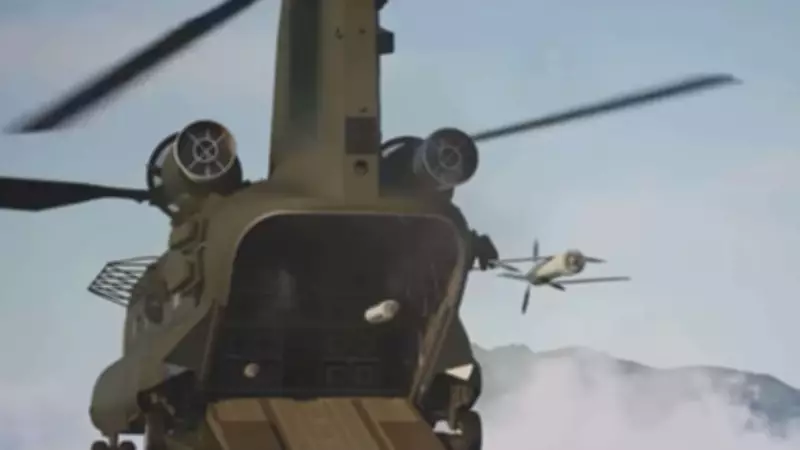
India's Air Force Advances with Drone Deployment from Aircraft and Helicopters
The Indian Air Force (IAF) is taking significant strides to revolutionize its aerial combat capabilities by integrating advanced drone systems deployable from helicopters and loitering munitions from transport aircraft. This strategic move is part of a broader global trend reshaping future warfare, as nations increasingly adopt autonomous technologies to gain tactical advantages.
Enhancing Offensive Capabilities with Deployable Drones
In a recent development, the IAF has issued a Request For Proposal (RFP) for drones that can be launched from helicopters and a Request For Information (RFI) for loitering munitions deployable from transport aircraft. These systems are designed to perform a variety of missions, including electronic warfare, target acquisition, and acting as decoys, thereby expanding the operational envelope of existing aircraft.
The deployment of these drones and munitions offers new offensive capabilities, allowing the IAF to free up its fighter jet fleet for other critical tasks. This is particularly beneficial given the current shortfall in fighter aircraft, enabling more efficient resource allocation and enhanced combat readiness.

Technical Specifications and Operational Requirements
The IAF has outlined specific requirements for these systems. Drones deployable from transport aircraft are expected to have a range of 500 kilometers, carry a 30 kg warhead, and achieve speeds of up to 350-400 km/h. Meanwhile, systems launched from helicopters are required to have a range of 80 kilometers and carry at least a 500-gram warhead. These specifications highlight the IAF's focus on precision and long-range engagement capabilities.
Global Initiatives and the Shift in Warfare Strategies
Similar programs are being pursued worldwide, underscoring a significant shift in military strategies. The United States is developing the 'air launched effects' program, which involves networked swarms of autonomous systems to overwhelm enemy defenses. Additionally, the US Air Force's 'Gremlins' project and initiatives in China, Russia, and the United Kingdom reflect a global move towards integrating drone technology into aerial warfare.
Networked drone swarms launched from a distance can effectively neutralize enemy defenses without risking friendly assets, forcing adversaries to contend with both low-cost and high-cost threats simultaneously. This approach represents a fundamental rethink in how conflicts will be fought in the future, emphasizing the importance of autonomous and swarm technologies.
Impact on Future Aerial Combat
The adaptation of various aircraft platforms to deploy drones and loitering munitions is transforming aerial warfare. By leveraging these advanced systems, the IAF aims to enhance its offensive and defensive operations, ensuring it remains competitive in an evolving global security landscape. This initiative not only addresses immediate tactical needs but also positions India at the forefront of military innovation.
As nations continue to invest in similar technologies, the role of drones and autonomous systems in warfare is set to expand, marking a new era in defense strategies where flexibility, cost-effectiveness, and technological superiority become key determinants of success.






