

Inside India's First Ricin Bioterrorism Case: From Invisible Doctor to National Probe
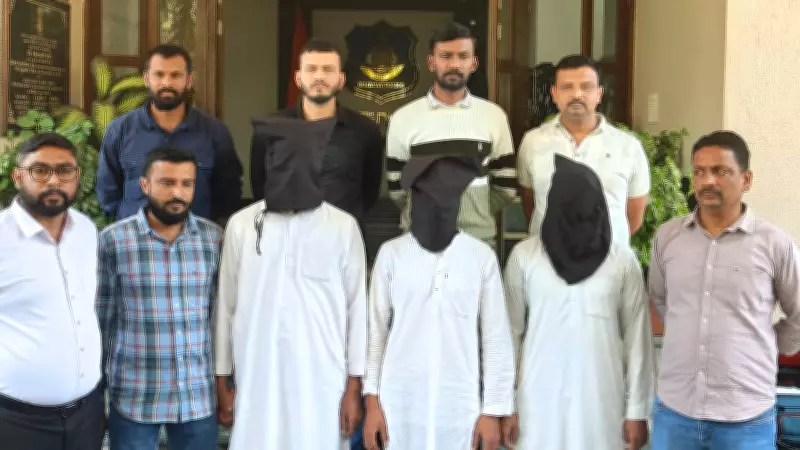
Last month, the Gujarat Anti-Terrorism Squad (ATS) handed over a case it describes as a bioterrorism plot to the National Investigation Agency (NIA), India's central agency for terror-related investigations. This development marks a significant turn in a complex case that has traversed four states and allegedly uncovered a home-grown laboratory, a cross-border weapons-smuggling network, and a potential international terror connection. At the heart of this alleged plot is Dr Ahmed Mohiyuddin Saiyed, a 35-year-old general physician from Hyderabad, whose quiet life in a middle-class neighborhood has been thrust into the national spotlight.
The Unassuming Doctor and His Arrest
In the serene lanes of Fort View Colony, Rajendra Nagar, near Hyderabad's Golconda Fort, Dr Saiyed was virtually invisible to his neighbors. Married but estranged, he lived with his family, kept to himself, and conducted online medical consultations rather than working at hospitals or clinics. His arrest on November 7, 2025, and subsequent police searches of his home shocked the community, with residents expressing disbelief that a terror suspect could live among them. Saiyed's family and lawyer vehemently deny the allegations, claiming he was framed and misled into a castor oil business for financial gain, with no intent to extract ricin.
The Alleged Plot Unravels
The case began when Gujarat ATS received confidential information that Saiyed was in Gujarat with alleged intentions of carrying out a terrorist attack. Police tracked his movements, intercepting him at the Adalaj toll plaza in a silver Ford Figo. During the search, authorities allegedly found three pistols, 30 live cartridges, and four liters of castor oil in a plastic jar. Saiyed was reportedly returning to Hyderabad after picking up weapons from a dead drop near Kalol in rural Gandhinagar, a method used to avoid direct contact between sender and recipient.

Investigators linked Saiyed to two other men: Azad Suleman Sheikh, a 20-year-old tailor from Shamli, Uttar Pradesh, and Mohammad Suhail Mohammad Saleem Khan, a 23-year-old student from Lakhimpur Kheri, Uttar Pradesh. Police allege these two retrieved the weapons from a dead drop in Rajasthan's Hanumangarh district and brought them to Gujarat. At a press conference, Gujarat ATS Deputy Inspector General Sunil Joshi stated that Saiyed was in contact with a foreign national, Abu Khadija, believed to be part of the Islamic State of Khorasan Province (ISKP), to carry out terrorist activities in India.
The Ricin Connection and Home Laboratory
Ricin, a deadly protein extracted from castor beans, is listed as a Schedule 1 toxin under the Chemical Weapons Convention due to its high risk as a chemical weapon. There is no antidote for ricin poisoning, and while it has been used in targeted assassinations, there are no recorded mass-casualty events involving it. Police allege Saiyed was attempting to isolate ricin at a home laboratory in Hyderabad, using equipment such as an oil press machine, sieves, funnels, and chemicals like acetone. Forensic reports from late December allegedly detected traces of ricin mixed with acetone, though investigators believe he had not successfully isolated it or developed an effective delivery mechanism.
Seized items from Saiyed's home included a blue barrel of hazardous liquid, several chemicals, six bottles of acetone, and kilograms of castor bean waste mash. Police also found literature on evading detection and a black flag with Arabic inscriptions at Khan's home, prompting probes into possible ISKP connections. The suspects allegedly scouted locations for attacks, including the Rashtriya Swayamsevak Sangh office in Lucknow, the Agricultural Produce Market Committee in Delhi's Azadpur, and the fruit market in Ahmedabad's Naroda.
Legal Proceedings and Family Defense
Saiyed, Sheikh, and Khan were booked under the Unlawful Activities (Prevention) Act, the Bharatiya Nyaya Sanhita, and the Arms Act. Police seized arms, castor oil, mobile phones, laptops, and the car used by Saiyed. In a disturbing incident, the three suspects were attacked by inmates at Sabarmati Central Jail in Ahmedabad, with Saiyed sustaining an eye injury. They have since been moved to a high-security cell.

Saiyed's family describes him as a loving, responsible sibling who supported them through online medical consultations. They insist he is incapable of plotting a terror strike and was lured into a business deal. His lawyer, K V Dastoor, argues that Saiyed had no knowledge of the weapons found in his possession and was merely seeking payment for castor oil work. The case has been transferred to the NIA as part of routine procedure for terror investigations, with ongoing examinations into the alleged bioterrorism plot and its international links.





