

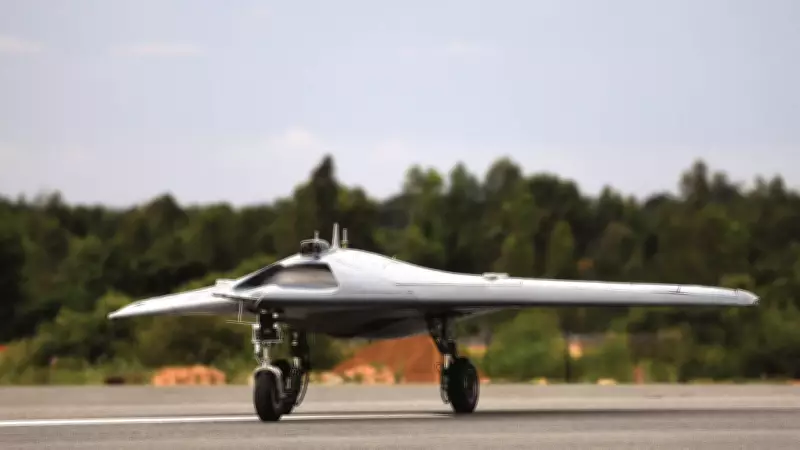
India Advances Deployment of Indigenous 'Ghatak' Stealth Combat Drones
India has taken a significant step toward deploying its first domestically developed stealth unmanned combat aerial vehicle (UCAV), named 'Ghatak'. The Defence Acquisition Council (DAC) recently cleared the procurement of four squadrons of these advanced remotely piloted strike aircraft for the Indian Air Force (IAF).
Procurement Approval and Scale
On March 27, 2026, the DAC approved the acquisition of indigenous stealth combat drones under the category of 'Remotely Piloted Strike Aircraft'. This decision paves the way for the IAF to receive four squadrons, with reports indicating a total of approximately 60 to 80 units. The move aligns with India's long-term force development strategy under the Vision 2047 roadmap.
Design and Development
The Ghatak UCAV, designed and developed by the Defence Research and Development Organisation's (DRDO) Aeronautical Development Establishment, features a flying-wing design that bears a striking resemblance to the US B-2 'Spirit' stealth bomber. Unlike conventional fighter jets, this tailless configuration enhances its low-observability, making it difficult for enemy radar to detect.

Key specifications of the Ghatak include:
- A weight class of 13 tonnes, powered by the domestically developed dry Kaveri engine.
- An outer shell composed of 80–90% carbon-fibre prepreg composites, significantly boosting its radar-evading capabilities.
- The ability to carry a payload of up to 1.5 tonnes of armaments stored in internal weapon bays to maintain stealth.
Strategic Capabilities and Missions
The Ghatak UCAV is engineered for a range of critical military operations, including:
- Deep strike missions in contested airspace.
- Air defence suppression to neutralize enemy defences.
- Coordinated operations with fighter jets such as the LCA Tejas.
Originally known as the Autonomous Unmanned Research Aircraft (AURA) programme, this initiative represents India's push to develop next-generation stealth combat drones domestically, reducing reliance on foreign technology.
Implications for National Defence
The approval of the Ghatak UCAV squadrons marks a milestone in India's defence indigenization efforts. By leveraging advanced stealth technology and domestic engineering, the IAF aims to enhance its operational effectiveness in modern warfare scenarios. This development underscores India's commitment to strengthening its aerial combat capabilities while fostering self-reliance in defence manufacturing.






