

India's Artillery Modernization Accelerates with New Pinaka Regiment Deployment
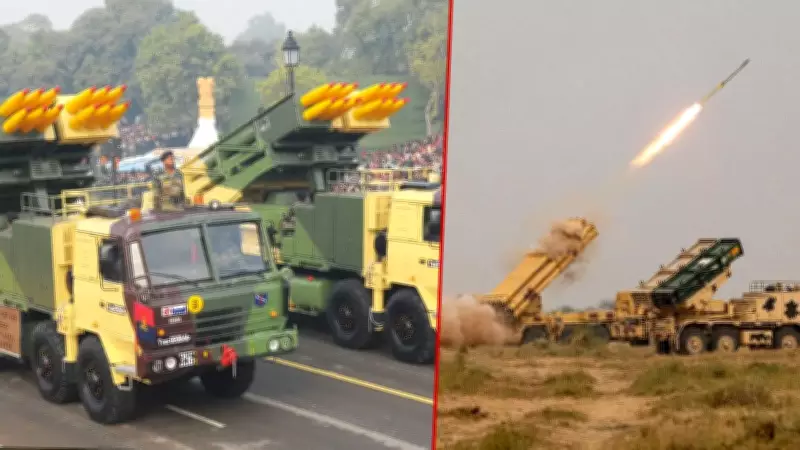
India's defense capabilities have reached a pivotal milestone with the operationalization of the seventh Pinaka Multi-Barrel Rocket Launcher (MBRL) regiment. According to recent reports, this development marks a significant step forward in the nation's ongoing artillery modernization program, which aims to bolster firepower along critical fronts.
Strategic Expansion and Future Targets
The eighth Pinaka regiment is currently undergoing conversion and is projected to become fully operational in the latter half of 2026. This progression is part of a broader plan that anticipates the total number of operational Pinaka regiments to reach ten by 2027. This expansion aligns with India's long-term objective of fielding 22 regiments, enhancing its defensive and offensive capabilities in response to regional security challenges.
The current phase completes a six-regiment order placed in August 2020, a decision made shortly after the Galwan Valley clash. This reflects a sustained and methodical effort by the Indian Army to address firepower requirements on both the northern and western fronts, ensuring preparedness in volatile border regions.

Formidable Combat Capabilities of the Pinaka System
The Pinaka MBRL system boasts impressive combat credentials that make it a cornerstone of India's artillery arsenal. A single launcher can fire 12 rockets in just 44 seconds, effectively neutralizing a target area measuring 1,000 by 800 meters. This rapid-fire capability is crucial for overwhelming enemy positions and providing tactical advantages in battlefield scenarios.
Variants of the Pinaka system engage targets at distances ranging from 38 kilometers to over 75 kilometers. Its shoot-and-scoot capability enhances survivability by allowing quick relocation after firing, reducing vulnerability to counter-battery fire. Each regiment is equipped with 18 launchers, amplifying its impact on the battlefield.
Technological Advancements and Cost-Effective Upgrades
In a move to extend the system's reach, the LRGR-120 variant has been developed, increasing the range to 120 kilometers. This upgrade requires only a canister change on existing launchers, keeping induction costs low while significantly boosting operational effectiveness. This cost-efficient approach allows for rapid deployment and scalability without substantial financial burdens.
The commitment to the Pinaka system's longevity was underscored in January 2026, when Tata Advanced Systems and Larsen and Toubro were awarded back-to-back contracts for long-term fleet sustainment. These contracts signal the Indian Army's intention to operate and maintain the Pinaka regiments for decades, ensuring sustained readiness and technological relevance.
Implications for National Security and Defense Strategy
The operationalization of additional Pinaka regiments strengthens India's artillery capabilities, providing a robust deterrent against potential threats. This expansion not only enhances firepower but also supports strategic autonomy by reducing reliance on foreign defense systems. The focus on indigenous development and maintenance, as seen with the contracts to Indian firms, promotes self-reliance in defense manufacturing.
As India progresses toward its goal of 22 Pinaka regiments, this artillery modernization program exemplifies a forward-looking defense strategy. It addresses immediate security needs while laying the groundwork for future advancements, ensuring that the nation remains prepared for evolving challenges in the region.






