

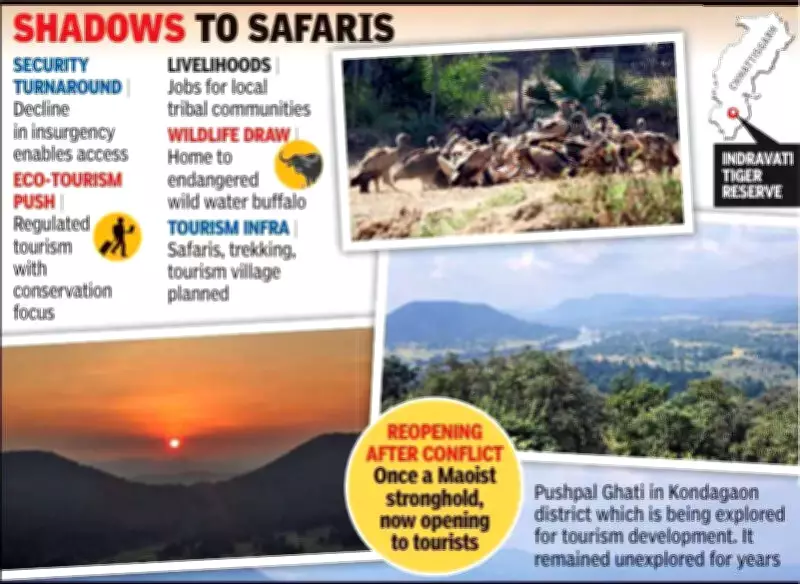
Indravati Tiger Reserve Set to Reopen as Security Improves in Bastar
In a significant development for conservation and regional stability, the Indravati Tiger Reserve (ITR) in Chhattisgarh's Bastar region is preparing to reopen its doors to tourists. This move comes after years of closure due to persistent Maoist activity that rendered the area inaccessible for both administrative purposes and eco-tourism initiatives.
From Conflict Zone to Conservation Hub
For an extended period, the reserve remained strictly off-limits due to the substantial threat posed by Left-Wing Extremism. This security concern severely restricted access for forest officials and completely halted all tourism-related activities, effectively isolating one of India's important wildlife habitats.
However, sustained security operations combined with developmental outreach programs have now significantly contained the Maoist problem. This improved security situation has enabled authorities to shift their focus toward unlocking the region's considerable ecological and tourism potential.

Comprehensive Eco-Tourism Plan Underway
Principal Chief Conservator of Forests (Wildlife) Arun Kumar Pandey confirmed that the forest department is implementing a comprehensive eco-tourism strategy designed to balance conservation objectives with meaningful community participation.
"We are preparing the youths of Mattimarka village at ITR and providing them with proper training to help promote tourism and the local economy," Pandey stated, highlighting the community-centric approach of the initiative.
A central component of this plan involves developing a "tourism village" along the picturesque Indravati riverbank. This facility aims to offer visitors an immersive experience that showcases both the rich local tribal culture and the breathtaking forest landscape.
Strategic Access Points and Infrastructure Development
The reopening strategy includes developing specific entry points to facilitate tourist access while maintaining security protocols. One primary entry will be established along the Kutru–Farsegarh route, while another has been proposed via the Bhopalpatnam–Mattimarka corridor.
ITR Deputy Director Sundeep Balaga elaborated on the operational aspects, noting, "As the threat of Naxals has now reduced, we have initiated the process of developing facilities for tourists." This includes essential infrastructure to ensure visitor safety and comfort while minimizing environmental impact.
Ecological Significance and Symbolic Importance
The Indravati Tiger Reserve holds particular ecological importance as one of the last natural habitats of the endangered wild water buffalo. Its reopening represents not just an ecological milestone but also serves as a powerful symbol of normalcy returning to a region long affected by insurgency.
The reserve's revival as a tourist destination is expected to generate sustainable economic opportunities for local tribal communities while simultaneously raising awareness about conservation needs. This dual approach addresses both developmental and environmental priorities in a region that has experienced significant challenges.
Authorities emphasize that the eco-tourism model being implemented prioritizes minimal ecological disturbance while maximizing community benefits. Training programs for local youth, development of visitor facilities, and strategic access planning all form part of this holistic approach to transforming a former conflict zone into a thriving conservation and tourism destination.






