

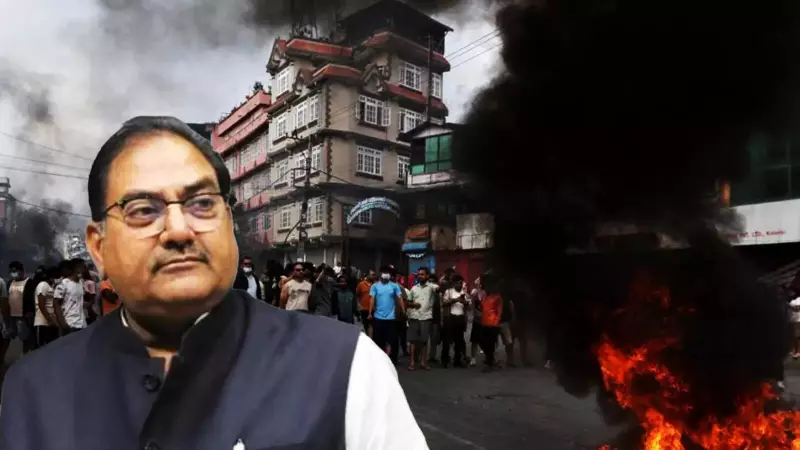
The president of the Indian National Lok Dal (INLD), Abhay Chautala, has ignited a significant political controversy by suggesting that mass uprisings witnessed in neighbouring countries could serve as a model for political change in India. His remarks, made on January 2, 2026, have drawn sharp criticism from the ruling Bharatiya Janata Party (BJP) while simultaneously opening a debate on public discontent.
Chautala's Provocative Statement
In his statement, Abhay Chautala explicitly referenced recent youth-led protests in Sri Lanka, Bangladesh, and Nepal. He pointed to these movements, which successfully led to the fall of governments, as a potential blueprint for political action within India. Chautala's comments brought immediate attention to specific regional upheavals: the 2022 economic crisis protests in Sri Lanka, the 2024 student-led uprising in Bangladesh, and the 2025 unrest in Nepal over social media restrictions.
Swift Political Backlash and Debate
The reaction from the ruling BJP was swift and severe. Party leaders accused Chautala of undermining India's democratic processes and institutions. They condemned the invocation of foreign protests, arguing that India's robust democratic framework provides ample avenues for change through elections and dialogue.

Conversely, voices from opposition quarters offered a different perspective. They argued that Chautala's statement, however controversial, points to genuine and widespread public grievances. These include pressing issues such as unemployment, challenges in the education sector, and the rising cost of living. The debate has effectively polarized opinion between those viewing the statement as seditious and those seeing it as a reflection of popular frustration.
Broader Implications for Indian Politics
This incident has done more than just create a war of words. It has renewed analytical focus on the recent history of political unrest across South Asia. Observers are now drawing comparisons between the socio-economic triggers in those nations and current conditions in parts of India. The key question being debated is whether the Indian political landscape is susceptible to similar mass, extra-parliamentary movements driven by youth and public discontent over economic issues.
The controversy underscores the heightened political tensions and the charged atmosphere where remarks about alternative forms of political mobilization are instantly volatile. It remains to be seen how this episode will impact the INLD's positioning and the broader political discourse leading up to future elections.






