

From Margins to Mainstream: Jamaat's Political Resurgence in Bangladesh
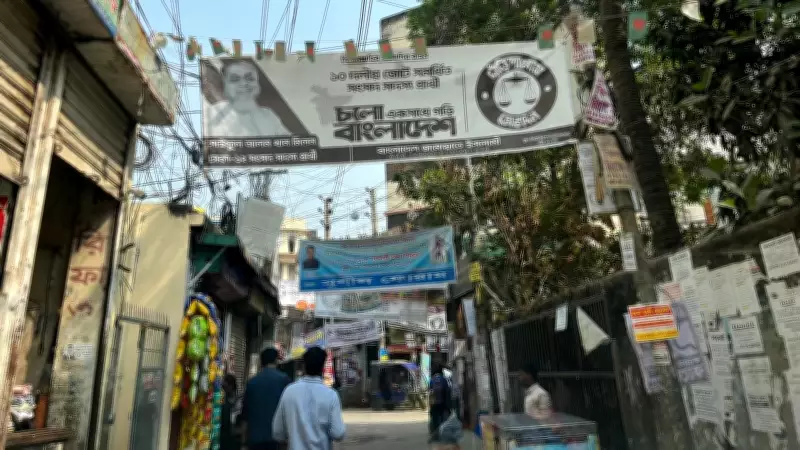
In the bustling Moghbazar area of Dhaka, the freshly painted yellow headquarters of Jamaat-e-Islami stands as a symbol of transformation. Once a ramshackle structure during its ban, the three-storeyed building now boasts new furniture, woodwork, and a swanky elevator, reflecting the party's renewed vigor. Streets around it are festooned with banners and posters urging voters to choose the "dari palla" (balance scale), the party's election symbol, signaling Jamaat's ambitious push in Bangladesh's political arena.
A Shift in Political Dynamics
With Sheikh Hasina's Awami League out of contention for the upcoming polls, Jamaat-e-Islami is emerging as the primary challenger to the Bangladesh Nationalist Party (BNP), led by Tarique Rahman, son of the late Khaleda Zia. This marks a significant turnaround for a party that faced bans, imprisonment of its leaders, and death sentences for war crimes during Awami League's 17-year rule. Today, Jamaat is not just surviving but thriving, with aspirations to become a major political force post-February 12 elections.
While the BNP is widely anticipated to win, Jamaat's worst-case scenario positions it as the main Opposition in Parliament. This is a stark contrast to its past marginalization, where it struggled for survival. The Islamist party, advocating for religious law, now eyes its best-ever electoral performance, aiming to increase its seat tally from a historical high of 18 in 1991 to 30-90 out of 300 seats. Some leaders, like young contender Mir Ahmed bin Quasem (Barrister Arman), even claim a potential narrow victory, emphasizing a commitment to constructive opposition if needed.

Factors Driving Jamaat's Confidence
The party's resurgence is fueled by multiple factors, most notably the success of its youth wing, Chhatra Shibir, in university elections across Bangladesh. This victory is seen as a bellwether of changing fortunes, with students noting the wing's active role in assisting those in financial need. However, concerns linger among the populace, particularly regarding potential restrictions on women. Jamaat has proposed five-hour work days for women, with wages for eight hours—a plan met with skepticism about its impact on employment opportunities.
To address fears, leaders like Barrister Arman assert a commitment to rule of law and non-discrimination based on gender or religion. Strategically, Jamaat has allied with the National Citizens' Party, leveraging social media campaigns that resonate with Bangladesh's Gen Z. Yet, experts like Professor Kazi Mohammed Mahbubur Rahman caution that while sophisticated online, Jamaat may lack the ground strength to dethrone BNP.
Cultural and Social Implications
On campuses like Dhaka University, Jamaat's influence is palpable. The Teacher Student Centre (TSC), once a hub for cultural activities featuring songs by Rabindranath Tagore or Kazi Nazrul Islam, now hosts fewer such events, with Qawwali programmes gaining prominence. Giant posters of Jamaat and BNP dominate the space, reflecting shifting political and cultural dynamics. Despite concerns, the TSC remains a gathering spot for young couples, undisturbed for now, hinting at a complex social landscape.
As Bangladesh approaches a pivotal election, Jamaat-e-Islami's journey from the fringes to the forefront underscores a potentially transformative era in the nation's politics. Whether in power or opposition, its role is set to be more consequential than in decades past, shaping the future of a country at a crossroads.






