

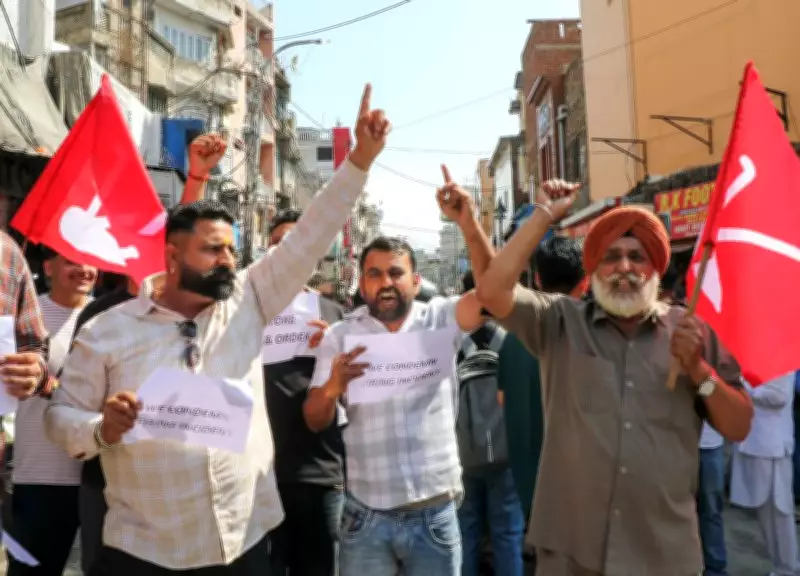
Jammu & Kashmir National Conference Stages Protest March in Jammu Over Attack on Farooq Abdullah
The Jammu & Kashmir National Conference, a prominent political party in the region, took out a significant protest march in Jammu on Thursday to vehemently condemn the recent attack on its president, Farooq Abdullah. The demonstration, which saw participation from party leaders, workers, and supporters, was organized to express solidarity with Abdullah and demand swift action against the perpetrators of the violent incident.
Details of the Protest March
The protest march commenced from the party's office in Jammu and proceeded through key areas of the city, with participants carrying placards and banners that read slogans against political violence and in support of Farooq Abdullah. The march was largely peaceful, with protesters chanting demands for justice and enhanced security measures for political leaders in Jammu and Kashmir. Senior leaders of the National Conference addressed the gathering, highlighting the need for a robust response from authorities to ensure such attacks do not recur.
Background of the Attack on Farooq Abdullah
Farooq Abdullah, a veteran politician and former chief minister of Jammu and Kashmir, was reportedly attacked earlier this week in an incident that has sparked widespread outrage across the political spectrum. The attack, which occurred in Srinagar, involved unidentified assailants, and while Abdullah escaped with minor injuries, it has raised serious concerns about the safety of political figures in the region. The National Conference has described the assault as a deliberate attempt to intimidate and silence opposition voices.

Political Reactions and Demands
During the protest march, National Conference leaders emphasized that the attack on Farooq Abdullah is not just an isolated incident but part of a broader pattern of political violence that threatens democratic processes in Jammu and Kashmir. They called for:
- Immediate investigation by law enforcement agencies to identify and arrest the culprits.
- Enhanced security protocols for all political leaders, especially those from opposition parties.
- Condemnation from all political quarters to foster a united stand against such acts of aggression.
The party also urged the central and state governments to take concrete steps to prevent similar incidents in the future, stressing that political dissent should be addressed through dialogue, not violence.
Implications for Jammu and Kashmir Politics
This protest march underscores the escalating tensions in Jammu and Kashmir's political landscape, where incidents of violence against leaders have become increasingly common. The National Conference's demonstration is seen as a strategic move to rally public support and pressure authorities into action. It also highlights the party's commitment to defending democratic values and protecting its members from threats.
Observers note that such protests could influence upcoming political dynamics in the region, potentially shaping voter sentiment and inter-party relations. The incident has already drawn attention from national media and political analysts, who are closely monitoring the situation for further developments.
Conclusion
The protest march by the Jammu & Kashmir National Conference in Jammu serves as a powerful statement against political violence and in support of Farooq Abdullah. By mobilizing its base and voicing demands for justice, the party aims to ensure that such attacks are not tolerated in a democratic society. As investigations proceed, the focus remains on whether authorities will heed these calls and implement measures to safeguard political activities in Jammu and Kashmir.






