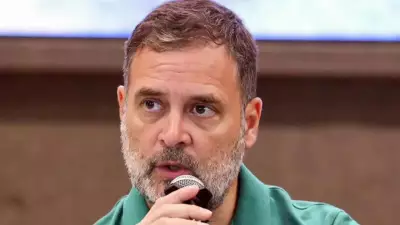
NEW DELHI: K Annamalai, once the BJP's most prominent leader and biggest hope in Tamil Nadu, has resigned from the party. The former IPS officer, who joined the BJP in 2020 and significantly raised the party's visibility in the state, is now preparing to launch his own regional political outfit. He believes that being part of a national party restricts his growth and potential.
Resignation and Reactions
Annamalai is currently in Delhi and has reportedly thanked senior party leaders, including Amit Shah, while submitting his resignation. However, a formal announcement is yet to be made. While some within the BJP remain hopeful of a change of heart, sources close to Annamalai indicate that he has moved on and is eager to implement his own plans. He has also submitted a detailed report analyzing the BJP's performance in the 2026 assembly elections, reportedly highlighting how he was sidelined within the party. Although the formal separation is happening now, the groundwork for this split was laid before the 2026 elections when the BJP abandoned Annamalai's vision for the party in Tamil Nadu.
The Rise of Annamalai in BJP
To understand the current situation, it is essential to revisit Annamalai's rapid ascent within the BJP. The party, which had struggled for years to establish a foothold in Tamil Nadu politics, found a beacon of hope in Annamalai. After resigning from the IPS in May 2019, he worked on social welfare through his NGO, "We the Leader Foundation," and aimed to enter politics to bring systemic change. Interestingly, the BJP was not his first choice; he initially wanted to start his political journey with actor Rajinikanth. However, when Rajinikanth's political plans fell through, Annamalai opted for the BJP, a party he described as having a nationalist vision and a merit-based platform.

Annamalai joined the BJP in 2020. Although he lost the 2021 assembly election from the Aravakuruchi constituency, he helped the party secure two seats in the state's western region. Recognizing his potential, the BJP appointed him as state party chief within a year. In 2023, Annamalai led the 'En Mann En Makkal' (My Land, My People) padayatra across Tamil Nadu, which significantly boosted the BJP's popularity. The 200-day march, covering all 234 assembly constituencies, was inaugurated by Amit Shah and concluded by Prime Minister Narendra Modi in February 2024, underscoring the high hopes placed on Annamalai.
Electoral Impact and Alliance Strains
The hype generated by Annamalai's padayatra likely convinced the BJP to sever ties with its ally, the AIADMK, and contest the 2024 Lok Sabha elections alone in Tamil Nadu. Annamalai's aggressive criticism of Dravidian politics and its icons, including AIADMK leaders, played a key role in the eventual breakup. The padayatra propelled the BJP's vote share to a record 11.38% in the 2024 Lok Sabha elections, a significant jump from 3.62% in 2019. However, this increase did not translate into seats, and the BJP failed to open its account for the second consecutive Lok Sabha election. In 2014, the party had won one seat with a 5.56% vote share.
This outcome likely led the BJP to reconsider its alliance with the AIADMK. Despite Annamalai's strong objections, the alliance was revived ahead of the 2026 assembly elections. This move marked the sidelining of Annamalai, who was subsequently removed as state BJP chief to appease the Dravidian ally. In the 2026 elections, the AIADMK dictated terms, ensuring Annamalai had no say in candidate selection. He stayed away from the contest. By 2026, his earlier dominance had turned into near isolation. When the results were announced on May 4, Annamalai was vindicated as the BJP's alliance with the AIADMK failed miserably, winning just one seat. However, he remained silent.

First Sign of Dissent
Annamalai's first open dissent came when he publicly criticized the Union education ministry over a notification making three languages compulsory for class IX students. On May 15, the CBSE issued a notification introducing a third compulsory language for class IX students from the current academic year, advancing a previously set deadline of 2029-30. Annamalai expressed shock, particularly for parents in Tamil Nadu, noting that children had already chosen a language in class VI. He argued that expecting a class IX student to learn a new language at short notice would pressure children and affect learning outcomes. His decision to go public with his differences on the sensitive language policy indicated his desire to chart his own course.
Implications for BJP and Tamil Nadu Politics
While Annamalai's resignation is not surprising given his sidelining, his exit means the BJP must start from scratch in Tamil Nadu. Although he was not the state chief during the two assembly elections that overlapped with his tenure, his active presence energized the party. Annamalai became state BJP chief after the 2021 elections, in which the party won four seats with a 2.62% vote share. He resigned as state chief in 2025, a year before the 2026 elections, where the party's tally fell to one seat with a marginal vote share increase to 2.99%. The BJP now faces the risk of an exodus of local leaders and cadres following Annamalai's departure.
The overwhelming vote for debutant politician Vijay and his party TVK in Tamil Nadu indicates space for new political experiments. The BJP embarked on such a path with Annamalai but abandoned it midway. While Annamalai does not match Vijay's fan following, the former IPS officer, often called "Singham," enjoyed decent popularity among the state's youth. The "what if" question will likely haunt both the BJP and Annamalai. For the BJP, it was a Hobson's choice between continuing the Annamalai experiment or aligning with the AIADMK to form an anti-DMK front. The party chose its old ally, leaving Annamalai with no option but to resign. Ironically, the very aggression that made him popular within the BJP led to his exit.