

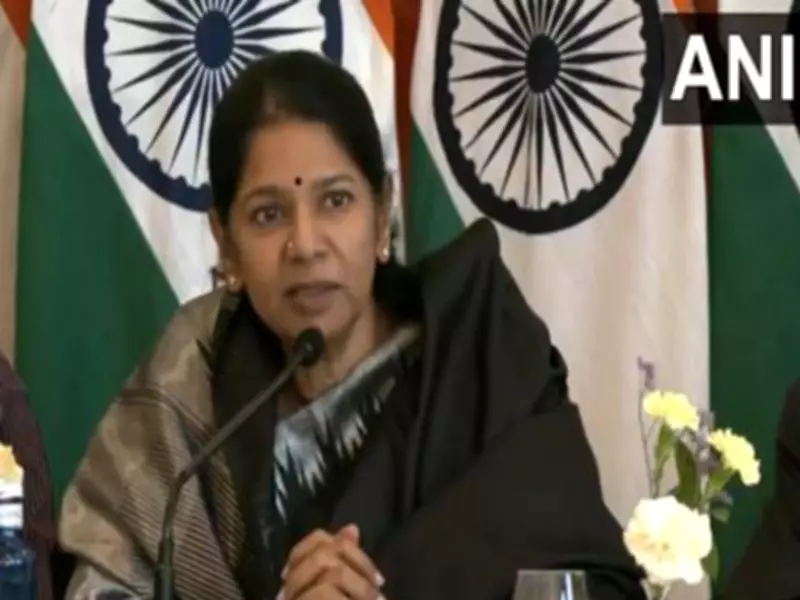
DMK's Kanimozhi Advocates for Women's Schemes as Social Investment
In a significant statement, DMK leader and Member of Parliament Kanimozhi has articulated that government initiatives aimed at women should be viewed not merely as welfare measures but as a crucial form of social investment. She emphasized that these schemes are fundamentally designed to secure social justice and foster empowerment across society.
Redefining Welfare as Strategic Investment
Kanimozhi highlighted that traditional approaches often label programs for women as basic welfare or charity. However, she argued that this perspective is outdated and fails to recognize the broader economic and social benefits. By framing these initiatives as social investments, she underscored their role in building a more equitable and just society where women can actively participate and contribute.
The DMK leader pointed out that such investments yield long-term dividends by enhancing women's education, health, and economic independence. This, in turn, leads to stronger communities and a more robust national economy. Her comments come at a time when discussions around gender equality and women's rights are gaining prominence in political and social discourse.

Focus on Social Justice and Empowerment
Kanimozhi stressed that the ultimate goal of these schemes is to achieve social justice, a core principle for the DMK party. She explained that empowering women through targeted policies helps address historical inequalities and systemic barriers that have hindered their progress.
- Schemes providing financial assistance for education and skill development.
- Programs aimed at improving healthcare access for women and children.
- Initiatives supporting entrepreneurship and employment opportunities.
By investing in women, society invests in its own future, creating a ripple effect of positive change. Kanimozhi's remarks align with broader efforts to integrate gender-sensitive policies into governance, ensuring that women are not left behind in the nation's development journey.
Political and Social Implications
As a prominent figure in Tamil Nadu politics, Kanimozhi's advocacy reflects the DMK's commitment to social justice and inclusive growth. Her statements are likely to influence policy discussions and encourage a shift in how women-centric programs are perceived and implemented.
This perspective challenges other political entities to reevaluate their approaches, promoting a more holistic view of women's empowerment as essential for national progress. It also resonates with global movements advocating for gender equality and sustainable development.
In conclusion, Kanimozhi's call to treat women's schemes as social investment rather than mere welfare marks a progressive step toward achieving true social justice. It underscores the need for continued efforts to empower women and build a fairer society for all.






