

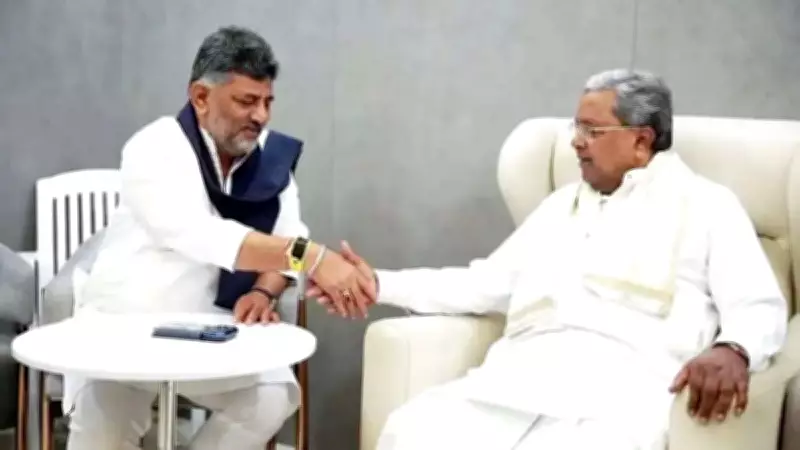
Karnataka Chief Minister Siddaramaiah and Deputy Chief Minister D.K. Shivakumar arrived in Delhi on Tuesday to hold discussions with the Congress high command regarding the allocation of cabinet berths. The move comes ahead of the much-anticipated government formation in the state, which has been pending due to delays in finalizing the ministry.
Key Discussions on Cabinet Expansion
The two leaders are expected to meet Congress President Mallikarjun Kharge and former party chief Rahul Gandhi to finalize the list of ministers. Sources indicate that the party is considering a mix of experienced and fresh faces to balance caste and regional equations. The cabinet expansion is likely to take place later this week after the approval from the central leadership.
Power Sharing Dynamics
The visit underscores the ongoing power-sharing negotiations between the factions led by Siddaramaiah and Shivakumar. While Siddaramaiah is the chief minister, Shivakumar has been eyeing key portfolios. The Congress high command is keen to ensure a smooth transition and avoid any internal strife that could destabilize the government.

Background of Government Formation
Karnataka has been under President's rule since the collapse of the previous government. The Congress, which emerged as the single largest party after the recent elections, staked claim to form the government. However, the process was delayed due to legal challenges and negotiations with allies.
Upcoming Cabinet Swearing-In
According to party insiders, the swearing-in ceremony for the new ministers is likely to be held in Bengaluru on June 5. The ceremony will be attended by top Congress leaders, including Rahul Gandhi and Priyanka Gandhi Vadra. The final list of ministers is expected to be announced after the Delhi meeting.
Political analysts believe that the cabinet formation will be crucial for the Congress to assert its dominance in Karnataka and send a signal of stability ahead of the 2029 Lok Sabha elections. The party is also under pressure to deliver on its poll promises, including farm loan waivers and job creation.






