Karnataka Government Was Prepared for Supreme Court Battle Over Governor's Address
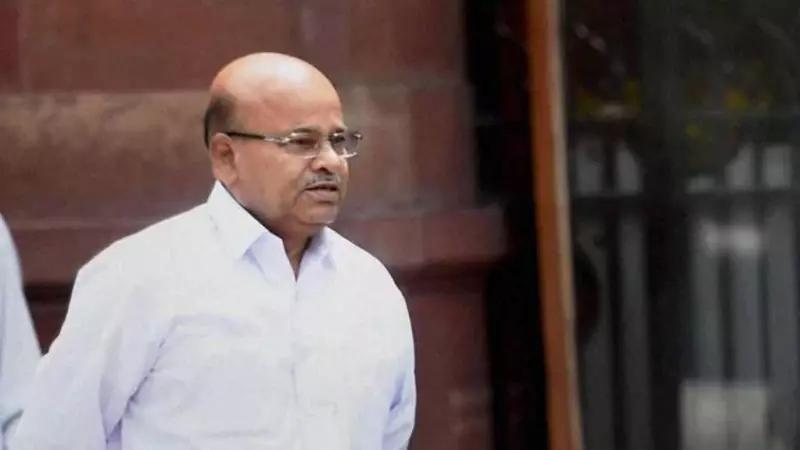
In a significant political development, the Karnataka government had made comprehensive preparations for a legal confrontation in the Supreme Court if Governor Thaawarchand Gehlot had refused to deliver his address to the joint session of the legislature. This revelation comes from A S Ponnanna, the legal advisor to Chief Minister Siddaramaiah, who confirmed that the Congress-led administration was ready to seek judicial intervention over what they perceived as a constitutional obligation.
Deliberations and Legal Preparations
The situation unfolded on Thursday when Governor Gehlot read out just two lines from a 43-page speech prepared by the state government. According to Ponnanna, the uncertainty surrounding the governor's willingness to deliver the address prompted immediate legal preparations. The government had dispatched Advocate-General N Shashi Kiran Shetty to Delhi on Wednesday evening, signaling their readiness to file a petition in the Supreme Court if necessary.
"Since there was some uncertainty over the governor delivering the address, due to his reservations over parts of the speech drafted by the Cabinet, we had prepared to file a petition in the Supreme Court and seek directions over the issue," Ponnanna explained. The governor's agreement to read the two lines came after prolonged deliberations with state officials, during which he reportedly sought advice from the solicitor-general of India.

Constitutional Principles at Stake
Chief Minister Siddaramaiah emphasized the constitutional mandate governing the governor's address. "Articles 176 and 173 are clear. He/she (Governor) shall read the speech," the chief minister stated shortly after Governor Gehlot concluded his brief address and exited the legislature. The government maintained that any refusal to read the prepared speech would constitute a violation of established constitutional principles, setting a potentially dangerous precedent for federal relations.
Contentious Paragraphs in the Speech
Governor Gehlot is said to have opposed 11 specific paragraphs within the 123-paragraph speech drafted by the state government. Notably, 10 of these contentious sections appeared immediately after the opening paragraph. The second paragraph, which sparked particular controversy, highlighted what the state government described as economic suppression within India's federal framework.
The disputed content included strong criticism of central policies affecting Karnataka:
- Economic injustice in tax devolution amounting to approximately ₹1.25 lakh crore denied to the state
- Concerns about centrally sponsored schemes and special programs
- Warnings that suppressing Karnataka's economy would adversely affect the entire nation
Criticism of MGNREGA Replacement
Subsequent paragraphs contained pointed criticism of the replacement of the Mahatma Gandhi National Rural Employment Guarantee Act (MGNREGA) with the recently passed VB-G RAM G legislation. The state government argued that:
- States should have been consulted when repealing employment guarantee laws
- Implementing such legislation without state consultation amounts to unconstitutional conduct
- Worker-centric rights have been diluted under the new law
- Laborers are being placed under contractor control rather than direct government protection
- Opportunities for wage revision based on inflation have diminished
- The removal of Mahatma Gandhi's name from the legislation represents a symbolic loss
- States facing financial stress must contribute 40% funding under the new scheme
- Failure to contribute could lead to withheld central funds and gradual extinction of the program
The 11th paragraph in dispute explicitly demanded the restoration of MGNREGA in its original form, reflecting the state government's firm stance on protecting social security measures for poor wage laborers.

Broader Implications for Federal Relations
This confrontation between the Karnataka government and the governor's office highlights ongoing tensions in India's federal structure. The prepared legal battle underscores how state governments are increasingly willing to challenge what they perceive as overreach or obstruction from constitutional authorities. The episode also reveals the careful balancing act governors must perform between their constitutional duties and political considerations.
The resolution, while avoiding immediate legal confrontation, leaves unresolved questions about the boundaries of gubernatorial discretion in delivering government-prepared addresses. As Karnataka continues to assert its position within the national framework, such constitutional debates are likely to recur, testing the resilience of India's democratic institutions and federal balance.