

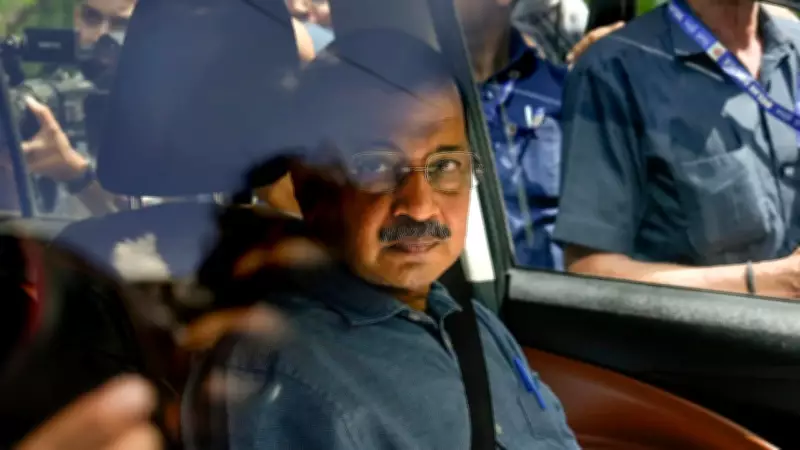
Arvind Kejriwal Presents Ten Grounds for Recusal in Delhi High Court Hearing
Arvind Kejriwal, the national convener of the Aam Aadmi Party, appeared before the Delhi High Court on Tuesday, representing himself in a plea seeking the recusal of Justice Swarana Kanta Sharma from the excise policy case. During the proceedings, Kejriwal articulated ten detailed grounds to support his argument, asserting a "real grave and reasonable apprehension" that he might not receive a fair trial under the current judge.
Perceived Endorsement of ED and CBI Arguments
Kejriwal highlighted a pattern where, in his view, "every single argument of ED CBI is endorsed by the court" and "every prayer of ED CBI is converted into a judgment." He contended that this trend, observed across multiple earlier judicial orders, significantly contributed to his sense of bias and unfair treatment in the case.
Unusual Speed of Legal Proceedings
The AAP leader also pointed to the accelerated pace of the proceedings, noting that no other matters were being heard "at this speed," particularly those involving "the most prominent political opponents." When questioned by the court about implying political bias, Kejriwal clarified that he was emphasizing the impression created by such circumstances rather than alleging any personal bias against the judge.

Ex Parte Order of March 9
Another critical ground involved an ex parte order issued on March 9, which stayed trial court proceedings without hearing all parties. Kejriwal argued, "In the absence of the opposing party (an ex parte proceeding conducted without notice) this Court passed an order. Subsequently, following a hearing spanning five months, this Court declared that order to be prima facie erroneous." He questioned the urgency behind such judicial intervention, to which the court responded that the manner of order writing is not subject to challenge at this level.
Prior Judicial Observations and Findings
Kejriwal raised concerns over earlier judicial observations that recorded strong findings on issues like approver statements and alleged corruption. He stated, "It appears the court gave a final judgment in just two hearings," adding that he had been "almost declared guilty and corrupt" in previous proceedings, which could unduly influence future hearings.
Extension of Relief Beyond Formal Prayer
He objected to what he described as the extension of relief beyond what was formally sought. Referring to the March 9 prima facie order, Kejriwal noted that although it stemmed from a CBI petition, relief affecting Enforcement Directorate proceedings was granted based on an oral request, arguing, "The ED had nothing to do with it. Mehta ji just made a verbal demand."
Stay on Proceedings Concerning Investigating Officer
Kejriwal flagged the stay on proceedings related to the investigating officer, emphasizing that the officer had not sought such relief. "The IO is not even asking for it," he said, calling this development one that "raises deep doubts" about the fairness of the judicial process.
Language and Procedural Issues in Court Orders
Among other grounds, he cited the language used in court orders, alleged denial of adequate opportunity to file replies, and references in an order stating that parties had "chosen not to attend," which he said left him "a little sad" and further fueled his apprehension.
Denial of Adequate Opportunity to Respond
Kejriwal also raised concerns about not being granted sufficient chances to file replies, arguing that such procedural denials directly impacted the fairness due to him in the legal proceedings.
Perceived Ideological Proximity
He expressed worries about perceived ideological proximity, referencing the judge's attendance at events organized by a body he linked to the RSS. "If your honour is attending a program of a particular ideology, then it creates reasonable bias," Kejriwal stated, adding that he and his party strongly oppose that ideology. The court sought clarification on whether such events were legal or political in nature.

Apprehension of Fairness and Integrity
Throughout the hearing, Kejriwal emphasized that the core issue was not the judge's integrity but the perception of fairness. "Question is not of the integrity of the judge, question is apprehension in mind of party," he said, relying on Supreme Court judgments to argue that reasonable apprehension alone can justify recusal. He drew parallels with the case of Satyendar Jain, where a matter was transferred after similar apprehensions were raised, seeking parity in treatment.
The court, which is currently hearing only the recusal plea, repeatedly clarified that it would confine itself to the ten grounds cited by Kejriwal. Concluding his submissions shortly before a brief recess, Kejriwal maintained that a series of judicial orders, courtroom observations, and surrounding circumstances had collectively created a perception of bias, necessitating the judge's recusal to ensure a just outcome.





