Bengaluru Minister Priyank Kharge Launches Scathing Attack on Bharat Ratna Demand for VD Savarkar
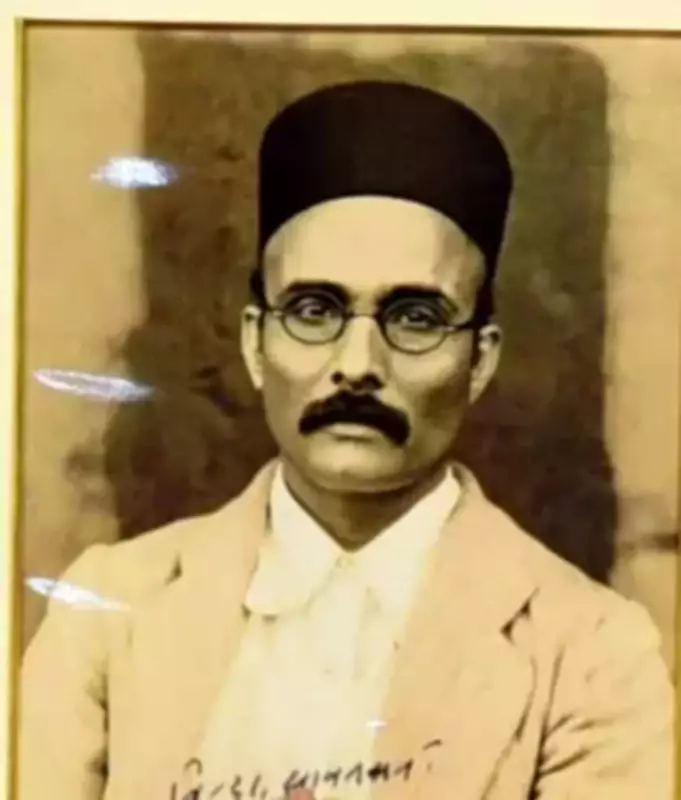
In a fiery social media post, Rural Development and Panchayat Raj Minister Priyank Kharge has vehemently opposed the growing demand to confer the Bharat Ratna, India's highest civilian honour, on Vinayak Damodar Savarkar. The Congress leader, who is also the son of party president Mallikarjun Kharge, posed a series of pointed questions challenging Savarkar's legacy and his contributions to the Indian freedom movement.
Responding to RSS Chief's Remarks
Kharge's critique came as a direct response to RSS chief Mohan Bhagwat's recent statement that awarding Savarkar the Bharat Ratna would "increase the prestige" of the honour. Bhagwat made these remarks during a two-day lecture series titled '100 Years of Sangh Journey — New Horizons' on Sunday, reigniting the long-standing debate about Savarkar's place in Indian history.
Questioning the 'Veer' Title and Freedom Struggle Role
"Bharat Ratna for a person who gave himself the title 'Veer'?" Kharge wrote in his post on X, immediately setting the tone for his criticism. He delved into historical records from Savarkar's imprisonment in the Cellular Jail in Port Blair, noting that "the Cellular jail had 698 cells and 80,000 prisoners were jailed there over 33 years."

Kharge emphasized that "only a handful of them wrote mercy petitions, but the most petitions were submitted by #Veer," referring to Savarkar by his self-proclaimed title. He specifically questioned why Savarkar wrote "six mercy petitions, including one from his wife" to British authorities.
Financial Arrangements with British Authorities
The minister raised further questions about Savarkar's financial dealings with the colonial government, asking why he received "a British pension of Rs 60 per month from August 1, 1929, until Independence in 1947." Kharge added, "Why did Veer seek an increase in pension?" challenging the narrative of Savarkar's uncompromising stance against British rule.
Directly addressing the RSS, Kharge demanded: "Can RSS list his exact achievements against the British with evidence?" This question strikes at the heart of the historical debate surrounding Savarkar's actual contributions to India's independence movement.
Political and Ideological Controversies
Kharge's criticism extended beyond Savarkar's personal actions to broader political and ideological questions. He questioned why Savarkar opposed the Quit India Movement and supported British recruitment of Indians in the army at a time when Subhas Chandra Bose was forming the Indian National Army to fight against British rule.
The minister also targeted Savarkar's role in the Hindu Mahasabha, asking why the party "ran governments with the Muslim League" and why it "was not banned when other parties were restricted by the British."
Two-Nation Theory and Nationalism Questions
In perhaps his most serious allegation, Kharge accused Savarkar of being "the first to propose the two-nation theory," which eventually led to the partition of India. He also questioned Savarkar's views on cow worship and his conceptualization of nationalism.
Kharge highlighted what he saw as a fundamental contradiction in Savarkar's worldview, asking: "Why did Veer call our Motherland as Fatherland?" This linguistic distinction carries significant symbolic weight in discussions about Indian nationalism and cultural identity.
Conclusion: A Direct Challenge
Kharge concluded his post with a powerful rhetorical question: "Bharath Ratna for a 'veer' who worked against Bharath! Masterstroke!" This final statement encapsulates his central argument that Savarkar's actions and ideologies were fundamentally at odds with India's national interests.

The minister's comprehensive critique comes at a time when the debate about historical figures and their legacies has become increasingly polarized in Indian politics. By raising specific historical questions about mercy petitions, British pensions, political alliances, and ideological positions, Kharge has framed the Bharat Ratna discussion as one requiring concrete evidence rather than symbolic gestures.
This exchange between a prominent Congress leader and the RSS chief highlights the ongoing political battle over historical narratives in India, with Savarkar's legacy serving as a particularly contentious flashpoint between different ideological camps.