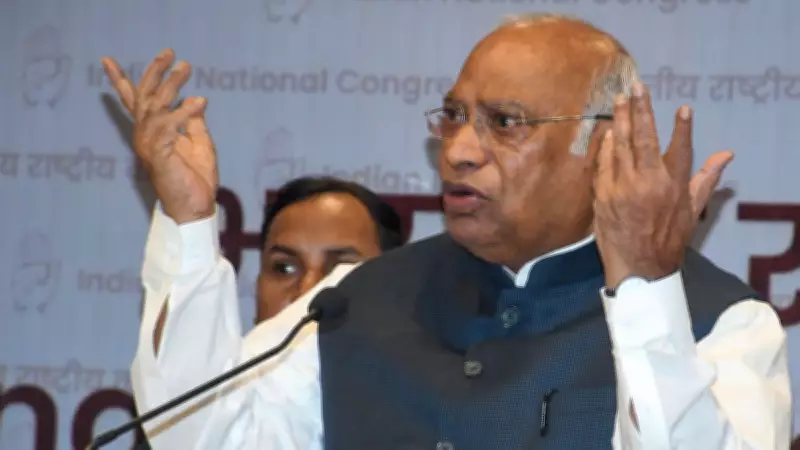
Congress President Mallikarjun Kharge Criticizes Government Over Women's Reservation Act Implementation
In a significant political development, Congress President Mallikarjun Kharge has penned a formal letter to Prime Minister Narendra Modi, expressing strong criticism of the central government's approach to implementing the Women's Reservation Act. The act, which mandates a 33% reservation for women in the Lok Sabha and state legislative assemblies, is scheduled to come into effect in 2026. Kharge's letter highlights concerns that the government is rushing the process without adequate preparation or consultation, potentially undermining the act's intended benefits.
Key Concerns Raised in the Letter
Kharge's communication to the Prime Minister outlines several critical issues regarding the implementation timeline and methodology. He argues that the hurried pace could lead to logistical and administrative challenges, affecting the smooth execution of the reservation policy. The Congress leader emphasized that such a landmark legislation requires careful planning, including delimitation of constituencies and consensus-building among political parties, to ensure its success and fairness.
Political Implications and Reactions

The letter has sparked a fresh debate in Indian political circles, with many viewing it as a strategic move by the opposition to hold the government accountable. Kharge pointed out that the Women's Reservation Act, passed by Parliament in 2023, is a crucial step toward gender equality in politics, but its implementation must be handled with diligence. He called for a more inclusive and transparent process, involving all stakeholders, to avoid any pitfalls that could delay or dilute the act's impact.
Background of the Women's Reservation Act
The Women's Reservation Act, officially known as the Constitution (One Hundred and Twenty-Eighth Amendment) Act, 2023, was a historic legislative achievement aimed at increasing women's participation in Indian democracy. It reserves one-third of seats in the Lok Sabha and state assemblies for women, with provisions for rotation of reserved seats. The act's implementation is tied to the delimitation exercise based on the first census after 2023, which is expected around 2026.
Kharge's letter underscores the need for a robust framework to support this transition, including voter education and capacity-building for women candidates.
In his critique, Kharge also referenced past delays in similar reservation policies, urging the government to learn from those experiences. He suggested that a phased implementation, with pilot projects and feedback mechanisms, could enhance the act's effectiveness. The Congress president's stance reflects broader opposition concerns about the ruling party's handling of key social reforms, positioning this as a test of the government's commitment to women's empowerment.
As the 2026 deadline approaches, this issue is likely to remain a focal point in national politics, with implications for upcoming elections and policy debates.