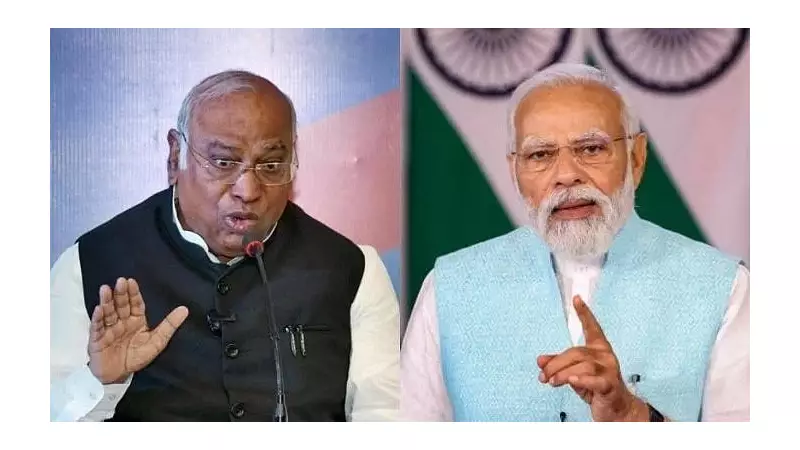
Congress President Mallikarjun Kharge has launched a scathing attack on the central government, accusing it of delivering a brutal blow to India's impoverished population. His criticism centers on the reported decision to discontinue the Mahatma Gandhi National Rural Employment Guarantee Act (MGNREGA) scheme.
A Harsh Accusation of Betrayal
In a strongly worded statement, Kharge framed the government's action as a double assault on the nation's poor. He alleged that after "kicking the poor in the stomach," the Narendra Modi-led government is now "stabbing them in the back" by moving to scrap the flagship rural jobs program. This dramatic accusation underscores the high political stakes surrounding the welfare scheme, which has been a cornerstone of rural support for years.
MGNREGA's Legacy: A Generation Lifted from Poverty
Defending the scheme's historical impact, Kharge highlighted its transformative role. He stated that MGNREGA was responsible for enabling an entire generation in India to escape the clutches of poverty. "Today, there is an entire generation in India that escaped poverty because of MGNREGA — a generation that reached schools, became educated, and is living with dignity," Kharge asserted. His comments, made on December 27, 2025, position the scheme not just as a source of wages, but as a fundamental instrument for social mobility and dignity.

Political Fallout and the Road Ahead
The allegation from the top Congress leader is set to intensify the political battle over welfare and economic policy. By invoking the imagery of a physical attack on the vulnerable, Kharge aims to frame the issue in stark moral terms. The move places the government's development agenda under fresh scrutiny, forcing it to defend its rationale for ending a program credited with providing a critical safety net. The controversy highlights the deep ideological divide on how best to address rural distress and economic inequality in the country.
As the news develops, all eyes will be on the government's formal response and the potential ramifications for rural households that have depended on MGNREGA for livelihood security. The debate promises to be a central theme in the ongoing political discourse.