

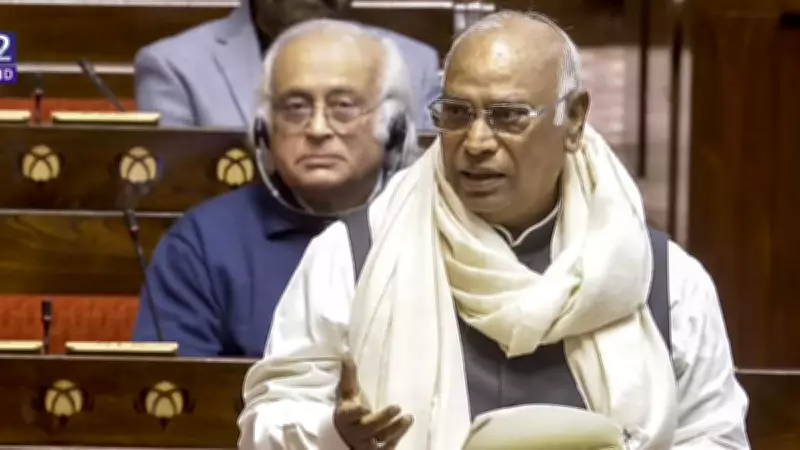
Congress Leader Mallikarjun Kharge Launches Scathing Attack on India-US Trade Agreement
In a fiery social media post that has ignited a political storm, Congress President Mallikarjun Kharge has vehemently criticized the recently announced India-United States trade deal, branding it as nothing short of a "trapped surrender" of the nation's sovereign interests. The senior opposition leader took to the platform X to voice his strong objections, directly targeting Prime Minister Narendra Modi's administration for what he perceives as a grave compromise.
Allegations of National Interests Being Mortgaged
Kharge's central accusation revolves around the claim that the fine print of the bilateral trade agreement reveals alarming concessions made by the Indian government. He asserted, "The detailed terms have exposed how PM Modi has effectively mortgaged India's national interests to secure this deal." This statement underscores the Congress party's growing concern over the strategic and economic implications of the pact, which they believe may favor American corporate entities at the expense of domestic industries and regulatory autonomy.
Questioning the True Nature of the Agreement
Posing a rhetorical question that cuts to the heart of the controversy, Kharge asked whether this trade deal represents a genuine victory for India or is merely a public relations-wrapped sacrifice of the country's core economic and political priorities. This framing suggests that the opposition views the government's portrayal of the agreement as potentially misleading, designed to garner popular support while concealing unfavorable clauses that could undermine long-term national development goals.

Political and Diplomatic Ramifications
The timing of Kharge's critique is particularly significant, coming amidst heightened diplomatic engagements between New Delhi and Washington. The trade deal, which aims to bolster economic cooperation and reduce tariffs, has been touted by the Modi administration as a landmark achievement that will enhance India's global trade footprint. However, the Congress president's remarks highlight deep-seated apprehensions within opposition circles regarding:
- The potential erosion of India's policy sovereignty in key sectors such as agriculture, technology, and manufacturing.
- Unfair advantages granted to US-based multinational corporations, which could stifle local businesses and innovation.
- The broader geopolitical implications of aligning too closely with American economic strategies without adequate safeguards.
Broader Context of India-US Relations
This incident adds another layer of complexity to the already multifaceted India-US relationship, which has seen both cooperation and contention over trade issues in recent years. While bilateral ties have strengthened in areas like defense and counter-terrorism, trade negotiations have often been fraught with disagreements over market access, intellectual property rights, and digital trade policies. Kharge's intervention signals that domestic political opposition will closely scrutinize any agreements that might be perceived as compromising India's economic independence.
As the debate unfolds, the government is expected to defend the deal vigorously, emphasizing its benefits for job creation, investment inflows, and technological exchange. Meanwhile, the Congress party, under Kharge's leadership, is likely to continue its campaign to frame the agreement as a detrimental concession, potentially making it a focal point in upcoming political discourse and electoral strategies. The public and parliamentary scrutiny of the deal's specifics will be crucial in determining whether it is celebrated as a diplomatic triumph or condemned as a strategic misstep.






