Lok Sabha Proceedings Disrupted Over Rahul Gandhi's Reference to Unpublished Naravane Memoir
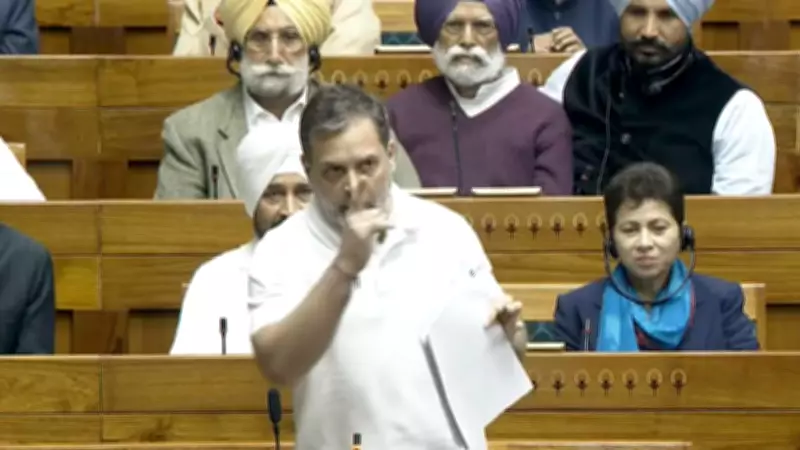
The Lok Sabha witnessed significant turmoil on Monday as Leader of the Opposition Rahul Gandhi's reference to the unpublished memoirs of former Army Chief General M M Naravane (Retired) triggered a political storm. The House faced repeated adjournments amid heated exchanges between opposition and treasury benches over parliamentary rules and national security discussions.
The Rule 349 Controversy and Parliamentary Uproar
Senior ministers including Defence Minister Rajnath Singh, Home Minister Amit Shah, and Parliamentary Affairs Minister Kiren Rijiju strongly objected to Gandhi reading from the unreleased book titled Four Stars of Destiny. Speaker Om Birla invoked Rule 349(i) of the Rules of Procedure and Conduct of Business in the Lok Sabha, directing Gandhi not to quote from the unpublished work.
Rule 349(i) clearly states that "a member shall not read any book, newspaper or letter except in connection with the business of the House." Despite the Speaker's ruling, Gandhi continued to reference both the memoir and a Caravan magazine article based on its contents, leading to sharp exchanges with government members.

National Security Debate and Political Confrontation
Rahul Gandhi argued that his references were directly connected to the President's Address and constituted a response to BJP MP Tejasvi Surya's allegations questioning the Congress party's patriotism. "This is from the memoirs of Army Chief Naravane... you will understand who is patriotic and who is not," Gandhi stated before attempting to read passages concerning the 2020 military standoff between India and China.
Defence Minister Rajnath Singh immediately challenged Gandhi, questioning whether the book had been officially published and arguing that quoting from unpublished material was improper parliamentary conduct. Singh demanded that Gandhi table a copy of the book for verification, to which Gandhi responded that he was quoting from a magazine report about the memoir.
Ministerial Objections and Defence of Parliamentary Norms
Amit Shah countered Gandhi's position by stating, "Magazines can write anything... he is saying the book has not been published. If the book has not been published, how can it be quoted?" The Home Minister emphasized the importance of verified sources in parliamentary discussions.
Parliamentary Affairs Minister Kiren Rijiju raised concerns about members defying the Chair's rulings, stating that "there was a limit" to how far members could stretch parliamentary norms. Rijiju urged Gandhi to avoid statements that could potentially demoralize the armed forces, emphasizing that "we all should come together in national interest."
Speaker's Intervention and Repeated Adjournments
Speaker Om Birla repeatedly reminded Gandhi that the House must function according to established "rules, process and convention." When Gandhi persisted in referring to Chinese military positions during the Ladakh standoff, Birla intervened firmly, stating, "This House will run according to rules and process. I have given a ruling."
The Speaker expressed concern that criticizing the army's conduct might not be appropriate for national interest, urging Gandhi to maintain the dignity of the House while discussing the President's Address. Gandhi retorted that "everyone in the army knows what happened" and accused the government of hiding realities from the public.
The confrontation ultimately led to the House being adjourned for the second time, highlighting the deepening political divide over how national security matters should be discussed in Parliament. The incident underscores ongoing tensions between the opposition's right to raise security concerns and the government's insistence on adhering to parliamentary procedures and protecting military morale.