Parliamentary Proceedings Halted as Ministers Object to Gandhi's References
The Lok Sabha witnessed dramatic scenes on Monday afternoon when proceedings were abruptly adjourned following a massive uproar in the House. The controversy erupted when senior ministers in Prime Minister Narendra Modi's Cabinet, including Home Minister Amit Shah and Defence Minister Rajnath Singh, interrupted Leader of Opposition Rahul Gandhi during his speech.
Unpublished Memoir Sparks Parliamentary Confrontation
The confrontation centered around Gandhi quoting purported excerpts from the yet-to-be-published memoir of former Army Chief General Manoj Naravane. The Congress leader, while replying to the motion of thanks on President Droupadi Murmu's address, referenced a magazine that had published sections from Naravane's unpublished book discussing the 2017 Doklam stand-off with China.
Defence Minister Rajnath Singh, Home Minister Amit Shah, and Parliamentary Affairs Minister Kiren Rijiju strongly objected to Gandhi's references, arguing that quoting from an unpublished book violated parliamentary rules. They demanded that the opposition leader authenticate his sources before the House.

Speaker Intervenes Amid Growing Tensions
Speaker Om Birla intervened in the heated exchange, disallowing Gandhi from reading further from what he termed the 'unpublished' book, citing violations of House rules. Birla repeatedly urged Gandhi to stick to the day's scheduled business, which was the motion of thanks on the President's address to the joint session of Parliament on January 28th.
The parliamentary disruption occurred during the ongoing Budget Session, just a day after Finance Minister Nirmala Sitharaman presented the Union Budget 2026. The timing added significance to the confrontation between the government and opposition benches.
Controversial Memoir: Four Stars of Destiny
Sensitive Revelations and Publication Delays
At the heart of the controversy lies General Naravane's memoir titled Four Stars of Destiny, which has not yet been published. The book contains detailed accounts of sensitive military operations and government decision-making processes, particularly concerning the 2020 India-China border clashes and the Doklam stand-off.
The memoir has prompted a government-mandated review that has delayed its publication, originally scheduled for April 2024. Extracts published by news agency PTI in December 2023 revealed several controversial aspects that have drawn criticism for potentially breaching norms regarding disclosures by retired military officers.
Key Revelations in the Unpublished Work
Among the most significant revelations in Naravane's memoir are:
- A detailed account of a late-night conversation on August 31, 2020, with Defence Minister Rajnath Singh during Chinese troop movements at the Rechin La pass in eastern Ladakh
- Critical observations about the Agnipath recruitment scheme, launched in June 2022
- Insights into high-level military decision-making processes during critical national security situations
Agnipath Scheme Controversy
The memoir provides particularly controversial details about the Agnipath recruitment scheme. Naravane reveals that the Army had proposed retaining 75% of short-term recruits for long-term service, but the final model approved by the government retained only 25% after four years.
According to the former Army Chief, the initial salary of ₹20,000 was deemed unacceptable for soldiers risking their lives, leading to Army pushback that resulted in the amount being raised to ₹30,000. The memoir portrays the scheme as a politically driven initiative that overrode military advice, contradicting the government's narrative that it originated with the armed forces to reduce the age profile.
Distinguished Military Career of General Naravane
Service and Leadership
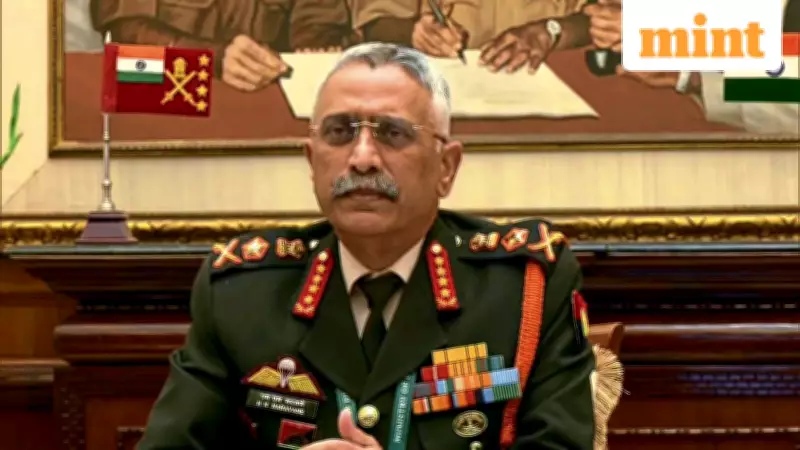
General Manoj Naravane, who retired in April 2022 after four decades of distinguished service, served as India's Chief of Army Staff from December 2019 to April 2022. His tenure included the challenging period of the 2020 India-China border clashes and the COVID-19 pandemic.

According to a government note released upon his retirement, Naravane will be remembered for ensuring the health of Indian Army personnel during the pandemic, providing a resolute response to challenges in Eastern Ladakh, and pushing forward initiatives for self-reliance in defense manufacturing.
Educational and Professional Background
An alumnus of the National Defence Academy and Indian Military Academy, Naravane was commissioned into the Sikh Light Infantry Regiment in June 1980. His extensive educational qualifications include:
- Master's Degree in Defence Studies
- M.Phil in Defence and Management Studies
- Currently pursuing a Doctorate
He has attended prestigious institutions including the Defence Services Staff College in Wellington and the Higher Command Course in Mhow.
Command and Staff Appointments
During his illustrious career spanning over four decades, General Naravane held numerous significant positions:
- Commanded the Republic Day Parade in 2017 as General Officer Commanding Delhi Area
- Served as General Officer Commanding-in-Chief of the Eastern Command in Kolkata
- Held the position of Vice Chief of the Army Staff before becoming Chief of Army Staff
- Served with the Indian Peace Keeping Force in Sri Lanka
- Commanded a Rashtriya Rifles Battalion and raised an Infantry Brigade
- Served as Inspector General of Assam Rifles (North)
- Commanded a Strike Corps in the Western Theatre
Broader Implications and Key Takeaways
The parliamentary confrontation highlights several critical issues concerning military transparency, political accountability, and parliamentary decorum. The controversy surrounding General Naravane's unpublished memoir raises important questions about:
- The boundaries of disclosure for retired military officers
- The relationship between military advice and political decision-making
- Parliamentary rules regarding the use of unpublished materials in debates
- The balance between national security concerns and public accountability
The incident underscores the complex interplay between military leadership, government policy, and parliamentary democracy in India's political landscape. As the Budget Session continues, the repercussions of this confrontation are likely to influence future parliamentary proceedings and debates on defense and security matters.