

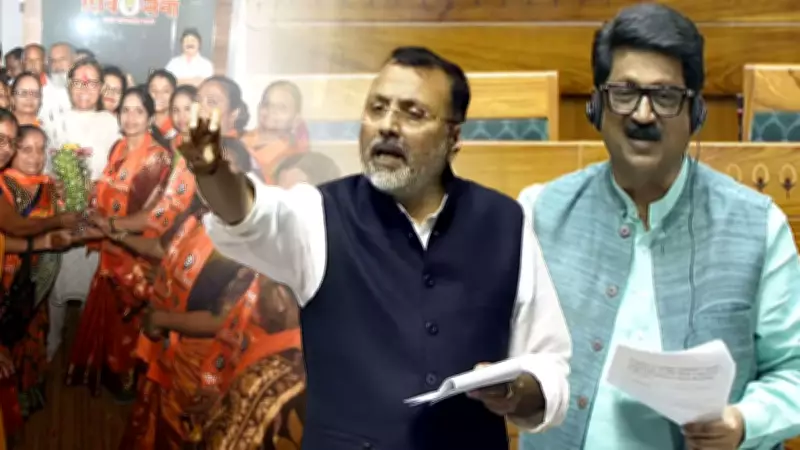
Lok Sabha Proceedings Disrupted by Heated Verbal Clash Between Sawant and Dubey
A fiery confrontation erupted in the Lok Sabha on Wednesday, April 16, 2026, as Members of Parliament Arvind Sawant and Nishikant Dubey engaged in a sharp verbal exchange that brought parliamentary proceedings to a temporary halt. The clash, marked by intense accusations and references to past controversies, underscores the escalating tensions and increasingly combative nature of political discourse within the House.
Sawant's Accusations Target Past Figures
During the heated debate, Arvind Sawant, a prominent opposition leader, directly named former BJP MP Kuldeep Singh Sengar and former Wrestling Federation of India chief Brij Bhushan Sharan Singh. Sawant's references to these figures, both embroiled in separate high-profile controversies in previous years, were intended to highlight issues of accountability and past misconduct. His statements were delivered with forceful rhetoric, aiming to put the ruling party on the defensive.
Dubey's Swift and Pointed Retaliation
In a swift and equally aggressive response, Nishikant Dubey, a BJP MP known for his outspoken style, hit back by invoking the name of Aaditya Thackeray, a leader from the Shiv Sena (UBT) faction. Dubey's counterattack referenced allegations and political disputes involving Thackeray, attempting to deflect criticism and turn the focus onto the opposition's own controversies. This tit-for-tat exchange quickly escalated, with both leaders raising their voices and trading barbs.

Context of Rising Political Tensions
The confrontation did not occur in isolation. It reflects a broader trend of heightened political animosity and partisan clashes that have become more frequent in recent parliamentary sessions. Observers note that such exchanges often overshadow substantive legislative work, contributing to a polarized atmosphere. The specific references to past figures like Sengar and Brij Bhushan, as well as current ones like Thackeray, indicate how historical and ongoing disputes are being weaponized in political debates.
Key elements of the clash include:
- Disruption of Proceedings: The verbal sparring led to significant interruptions, with the Speaker intervening multiple times to restore order.
- Accusatory Tone: Both Sawant and Dubey employed pointed language, accusing each other's parties of misconduct and evasion of responsibility.
- Public and Media Reaction: The incident quickly garnered attention on social media and news platforms, with analysts debating its implications for parliamentary decorum and governance.
Broader Implications for Parliamentary Functioning
This episode raises concerns about the functioning of India's parliamentary democracy. While robust debate is essential, such confrontational exchanges can hinder productive discussions on critical national issues. The clash between Sawant and Dubey exemplifies how personal and political grievances are increasingly playing out in public forums, potentially eroding public trust in legislative processes.
As tensions continue to simmer, there are calls from various quarters for more disciplined and issue-focused debates in the Lok Sabha. However, given the current political climate, similar incidents may recur, highlighting the need for mechanisms to foster constructive dialogue while allowing for legitimate opposition and scrutiny.






