Government Proposes Major Expansion of Lok Sabha to Implement Women's Reservation
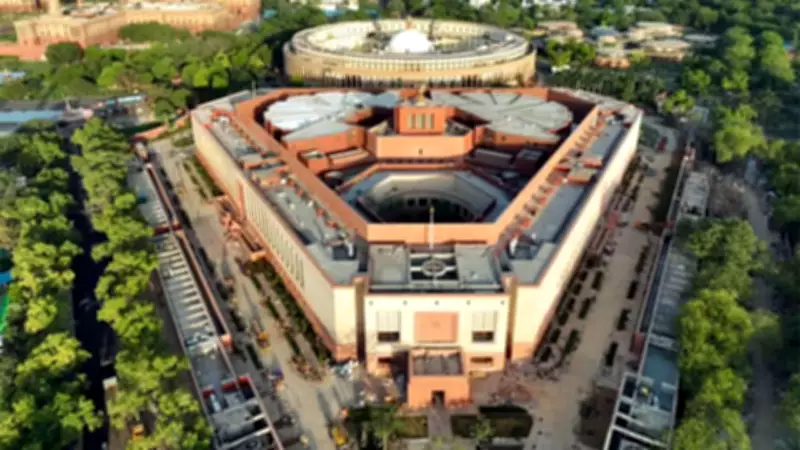
In a significant move to operationalize the long-pending 33 per cent reservation for women in legislative bodies, the Central government has reportedly drafted a proposal to increase the maximum strength of the Lok Sabha to 850 seats. This expansion aims to facilitate the implementation of the women's quota before the crucial 2029 parliamentary elections, marking a transformative step in India's democratic framework.
Details of the Draft Constitutional Amendment Bill
According to information obtained by news agency PTI, the draft Constitution amendment bill has been circulated among Lok Sabha members and is scheduled for introduction during a special sitting of Parliament beginning April 16. The comprehensive proposal outlines substantial increases not only in the Lok Sabha but also in state and Union territory assemblies to accommodate the mandated reservation for women.
The draft bill specifies that "The House of the People (Lok Sabha) shall consist of not more than 815 members chosen by direct election from territorial constituencies in the states; and not more than 35 members to represent the Union territories, chosen in such manner as Parliament may by law provide." The figure of 850 represents the upper ceiling, with the final number to be determined by the Delimitation Commission based on detailed assessment and data analysis.

Accelerating Implementation of Nari Shakti Vandan Adhiniyam
The Narendra Modi government's initiative seeks to fast-track the implementation of the Nari Shakti Vandan Adhiniyam by linking it directly to a delimitation exercise based on the latest published census data. This strategic approach would raise the Lok Sabha's effective strength to 816 seats, of which 273 would be constitutionally reserved for women through a rotational system across different constituencies.
Prime Minister Narendra Modi has emphasized the urgency of this legislative intervention, stating earlier this week that "Any further delay will be unfortunate and a gross injustice to the women of India." He further asserted that India's democracy would become "stronger and more vibrant" if the 2029 elections are conducted with women's reservation firmly in place, ensuring greater gender representation in the nation's highest legislative body.
Comprehensive Legislative Package and Political Dynamics
The government is expected to introduce two accompanying bills alongside the constitutional amendment:
- Legislation governing the delimitation process to determine exact seat allocations
- Enabling provisions for implementing the law in Delhi, Jammu and Kashmir, and Puducherry
While the accompanying bills can be passed by a simple majority, the constitutional amendment requires a special majority in both Houses of Parliament. This presents a significant political challenge, as the ruling NDA currently holds 292 seats in the Lok Sabha, while major opposition parties account for 233 seats, making back-channel negotiations crucial for securing the required support.
Delimitation Controversy and Regional Concerns
The proposal has sparked political friction regarding the principles of delimitation, with opposition parties raising substantial concerns about the methodology being adopted. Southern leaders have particularly warned about potential disadvantages to their states in the allocation process.
Tamil Nadu Chief Minister MK Stalin cautioned against "massive agitation" if his state's interests are harmed, while Telangana Chief Minister A Revanth Reddy flagged concerns about "injustice" in the proposed system. The Congress party has alleged that "when the intent behind a bill is mischievous, and the content of it is devious, the extent of damage to parliamentary democracy is enormous."
Population Data and Implementation Timeline
NDA sources indicate that seat allocation will follow proportional representation using census data, currently based on the 2011 figures, though the ongoing 2027 Census could also be considered once published. Interestingly, they argue that southern states may gain relatively due to better population control compared to northern states, potentially addressing some regional concerns.

The draft bill clarifies that "population" will mean figures from a census "as Parliament may by law determine," providing flexibility regarding which dataset is ultimately used. The statement of objects and reasons notes that waiting for the next census and subsequent delimitation would further delay women's political participation, necessitating immediate legislative intervention.
Under the existing 2023 law, the reservation would only have come into force after the first delimitation exercise following the post-2027 Census, effectively pushing implementation beyond 2034. The proposed amendments aim to dramatically advance this timeline to 2029, ensuring women's representation in the next parliamentary elections.
Duration and Future Implications
The reservation for women is set to last 15 years from the commencement of the 2023 law, unless Parliament decides to extend it further through subsequent legislation. This temporary measure is designed to create a foundation for more permanent gender equity in political representation while allowing for periodic review and adjustment based on evolving social dynamics and democratic needs.
The proposed expansion represents one of the most significant structural changes to India's parliamentary system in decades, potentially reshaping political representation, regional balance, and gender equity in the world's largest democracy. As the special parliamentary session approaches, all eyes will be on the legislative process that could determine the composition of India's Parliament for generations to come.