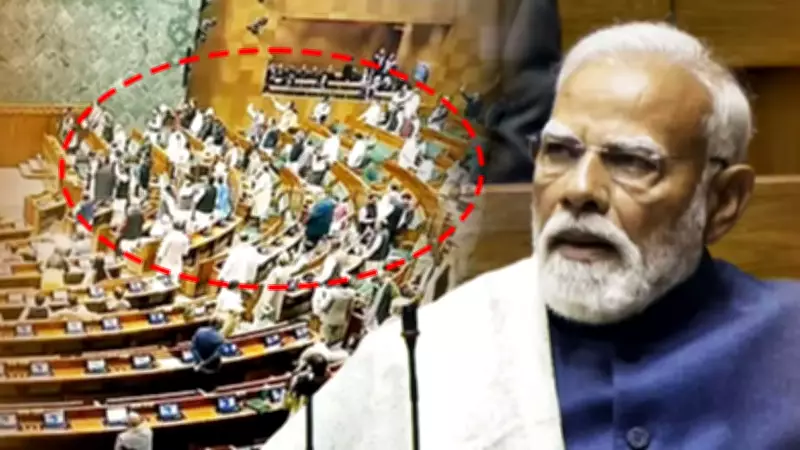
Lok Sabha Passes President's Address Without Prime Minister's Reply For First Time Since 2004
In an unprecedented parliamentary development, the Lok Sabha passed the Motion of Thanks on the President's Address without Prime Minister Narendra Modi delivering his customary reply. This marks the first such occurrence since 2004, highlighting a significant breakdown in parliamentary decorum amid a tense political standoff.
Opposition Protests Over Rahul Gandhi's Speaking Rights Lead to Adjournments
The proceedings were repeatedly adjourned due to persistent protests by the Opposition, primarily centered on allegations that Congress leader Rahul Gandhi was denied the right to speak. The Opposition argued that this violated parliamentary norms, while the government maintained that all rules were strictly followed, particularly regarding the citation of unpublished material related to the ongoing India-China standoff.
Government and Opposition Clash Over Parliamentary Rules
As tempers flared and the House descended into chaos, the government defended its position by emphasizing adherence to parliamentary protocols. The Congress party cited historical precedent from former Prime Minister Manmohan Singh's tenure, where similar situations were handled differently. In contrast, the Bharatiya Janata Party (BJP) accused the Opposition of deliberate obstructionism, claiming that their protests were aimed at disrupting the functioning of Parliament during the critical Budget Session.

Broader Implications for Parliamentary Functioning
Beyond the immediate political blame game, this moment underscores a deeper concern about the state of India's parliamentary democracy. The inability of the Lok Sabha to function fully amid sharp political polarization raises questions about the effectiveness of legislative processes during crucial sessions. The Budget Session, which typically addresses key economic policies and national priorities, was marred by these disruptions, potentially impacting governance and policy implementation.
Historical Context and Future Outlook
The last time such an incident occurred was in 2004, making this a rare event in India's parliamentary history. Analysts suggest that this episode reflects the growing intensity of political rivalries and the challenges of maintaining bipartisan cooperation in a polarized environment. As the government and Opposition continue to lock horns, the focus shifts to whether future sessions will witness similar disruptions or if mechanisms for dialogue and consensus-building can be restored to ensure smooth parliamentary functioning.