

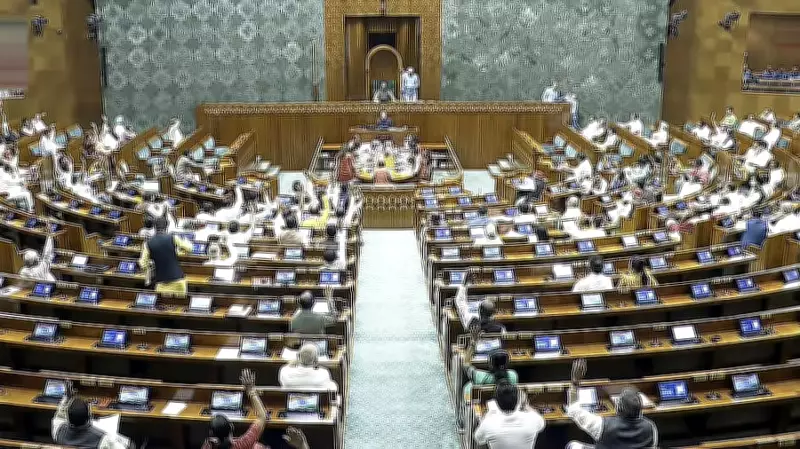
Lok Sabha Braces for Major Showdown Over Delimitation Constitution Amendment Bill
The Lok Sabha is poised for a significant political confrontation as the Narendra Modi-led government and opposition parties prepare to clash over a crucial Constitution Amendment Bill concerning delimitation. This legislative battle highlights deep-seated divisions in India's parliamentary landscape, with far-reaching implications for electoral representation and governance.
Parliamentary Numbers Set the Stage for Intense Debate
In the current Lok Sabha, which comprises 540 Members of Parliament, the ruling National Democratic Alliance (NDA) commands the support of 294 MPs. This majority positions the government to push forward with the Bill, but it faces staunch resistance from opposition parties, who have rallied 238 MPs to express their firm opposition. The narrow margin underscores the high stakes involved, as both sides gear up for a heated debate that could shape the future of India's electoral boundaries.
Understanding the Delimitation Bill and Its Implications
The Constitution Amendment Bill on delimitation aims to revise the allocation of parliamentary seats based on population changes, a process that has been frozen since 1976 to maintain stability in representation. Key aspects of the Bill include:

- Population-Based Redistribution: Adjusting the number of Lok Sabha seats to reflect demographic shifts, potentially altering political power dynamics across states.
- Constitutional Amendments: Requiring a two-thirds majority in Parliament for passage, making it a challenging legislative hurdle.
- Political Ramifications: Influencing electoral outcomes and resource allocation, with states experiencing population growth likely to gain more representation.
This move has sparked intense debate, with proponents arguing for fairer representation and critics warning of potential disruptions to federal balance and existing political equations.
Opposition's Stance and Strategic Moves
Opposition parties have united in their opposition to the Bill, citing concerns over its timing and potential impact on smaller states. They argue that the delimitation process could disproportionately benefit more populous regions, marginalizing others and undermining the principle of equitable representation. With 238 MPs on their side, the opposition is leveraging parliamentary procedures to mount a robust challenge, including possible filibusters and demands for broader consultations.
Government's Strategy and Broader Political Context
The Modi government, backed by its NDA allies, is pushing for the Bill as part of its agenda to modernize India's electoral framework. Officials emphasize that delimitation is essential for ensuring that parliamentary seats align with current population data, promoting democratic fairness. However, the showdown in the Lok Sabha reflects broader political tensions, as the government navigates complex negotiations and seeks to secure the necessary votes amid opposition resistance.
As the debate unfolds, all eyes are on the Lok Sabha, where the outcome could set a precedent for future constitutional amendments and reshape India's political landscape for years to come.






