

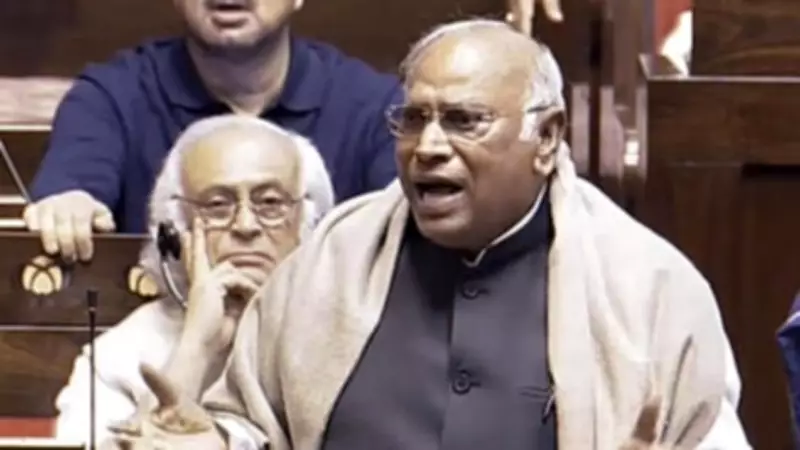
LPG Shortage Crisis Sparks Political Confrontation in India
The ongoing liquefied petroleum gas (LPG) shortage in India has escalated into a heated political dispute, with Congress President Mallikarjun Kharge launching a sharp critique against the Narendra Modi-led government. Kharge asserted that the scarcity is severely impacting poor and middle-class families across the nation, highlighting what he described as a failure to implement preventive measures to tackle the emerging crisis.
Kharge's Accusations: Government Inaction on LPG Supply
In a strongly worded statement, Kharge emphasized that the LPG shortage is not merely an inconvenience but a critical issue threatening household livelihoods. He pointed out that many households, particularly those in economically vulnerable segments, rely heavily on LPG for daily cooking needs. The Congress leader accused the Modi administration of neglecting early warning signs and not taking adequate steps to secure supply chains or manage distribution effectively.
"The government has been caught off guard," Kharge stated, "and it is the common people who are paying the price for this lack of foresight." He called for immediate intervention to alleviate the hardship faced by millions, urging authorities to prioritize domestic consumers over industrial or commercial users during this period of scarcity.

Nadda's Retort: Accusations of Political Opportunism
Responding swiftly to Kharge's allegations, Union Minister and Leader of the House in Parliament, JP Nadda, defended the government's actions. Nadda expressed regret that the Opposition, specifically the Congress party, was engaging in what he termed as "politics over a crisis." He argued that such criticisms undermine collective efforts to resolve the situation and distract from substantive solutions.
"It is unfortunate that even during challenging times, some political elements choose to play blame games instead of contributing constructively," Nadda remarked. He assured that the government is actively working to address the LPG shortage through coordinated measures with oil marketing companies and state governments. Nadda highlighted ongoing initiatives to ramp up imports, optimize distribution networks, and ensure equitable access to cylinders.
Broader Implications and Public Concern
The exchange between Kharge and Nadda underscores the deepening political polarization surrounding essential commodity management in India. The LPG shortage has reportedly led to long queues at distribution centers, price volatility in the black market, and increased reliance on alternative, often less efficient, cooking fuels. This situation raises questions about energy security and the resilience of India's supply infrastructure.
Experts suggest that multiple factors may have contributed to the crisis, including:
- Global supply chain disruptions affecting LPG imports.
- Domestic production shortfalls due to maintenance or operational issues.
- Increased demand during seasonal or festival periods.
- Logistical challenges in transportation and storage.
As the debate continues, citizens await concrete actions to restore normalcy. The government's response in the coming days will be closely monitored, with both political and economic ramifications at stake. The incident also reflects broader tensions between the ruling BJP and the Congress-led Opposition, setting the stage for further confrontations in Parliament and public discourse.






