Madras High Court Refuses to Intervene in PMK's 'Mango' Symbol Dispute
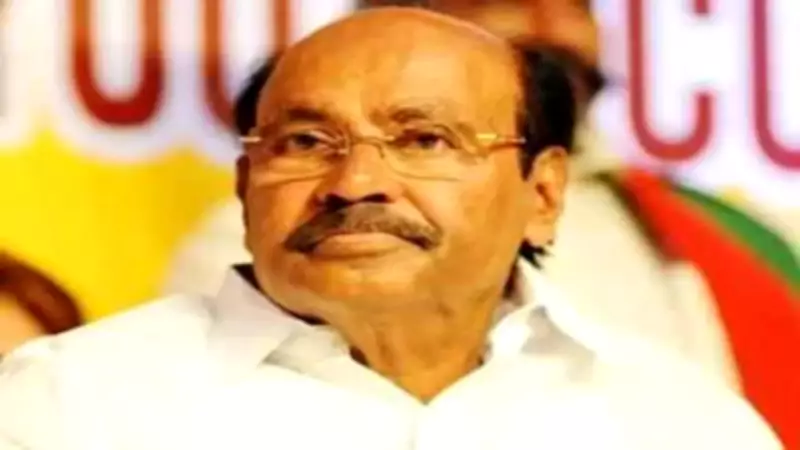
The Madras High Court, on Friday, declined to entertain a plea filed by PMK founder S Ramadoss, which sought to direct the Election Commission (EC) to freeze the party's iconic 'mango' symbol. This request was made in light of an alleged split within the party and an ongoing internal dispute over the presidency.
Ramadoss's Pleas and Court's Response
In his petition, Ramadoss had urged the court to issue directives to the EC, including declaring him as the legitimate party president, recognizing his team of office-bearers, and allotting the 'mango' symbol to his faction for the upcoming assembly elections in Tamil Nadu and Puducherry. However, the first bench, comprising Chief Justice Manindra Mohan Shrivastava and Justice G Arul Murugan, refused to entertain these pleas. The bench emphasized that the dispute, described as a conflict between father and son, must be resolved through a civil court rather than the high court.
Background of the Internal Conflict
According to Ramadoss, his son Anbumani was appointed as the party president for a fixed term of three years, spanning from May 2022 to May 2025, following a general body meeting. He asserted that this tenure was strictly limited under the party's constitution, with no provision for extension. Ramadoss alleged that after Anbumani's term expired, unauthorized and forged documents were created and submitted to the EC. These documents falsely claimed that a general body meeting was held in August 2023, extending the tenure of office-bearers led by Anbumani first to February 23, 2026, and later to August 1, 2026.

Election Commission's Role and Alleged Miscommunication
Ramadoss further contended that the EC issued a communication in July 2025, allotting the 'Mango' symbol to PMK for elections in Bihar, Tamil Nadu, and Puducherry. However, he claimed that this communication was sent to an incorrect address, directed to Anbumani instead of Ramadoss's current office address, potentially exacerbating the confusion and dispute within the party.
The court's decision underscores the need for internal party matters to be settled through appropriate legal channels, highlighting the complexities involved in political symbol disputes ahead of crucial state elections.