

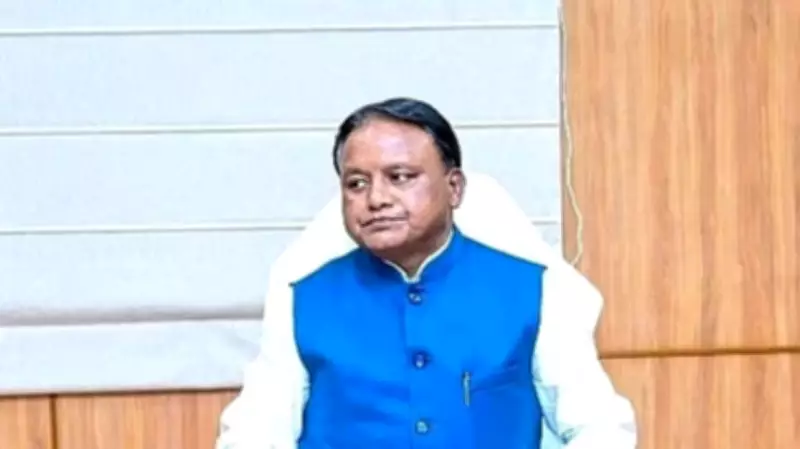
Odisha Chief Minister Draws Epic Parallels in Women's Reservation Bill Debate
In a fiery political address, Odisha Chief Minister Mohan Charan Majhi launched a scathing critique of opposition parties, drawing vivid parallels from Hindu mythology to underscore his stance on the contentious women's reservation bill. Majhi explicitly likened the collective opposition to the Kauravas, the antagonistic clan from the epic Mahabharata, known for their deceit and adversarial role. This dramatic comparison set the tone for a speech that blended cultural references with sharp political commentary.
A Stark Warning to the Congress Party
Extending his mythological analogy, Chief Minister Majhi issued a direct warning to the Congress party, suggesting it could meet a fate akin to that of Sishupal, a character from the Mahabharata who was ultimately defeated for his repeated transgressions. This cautionary remark highlighted the escalating tensions in the political landscape surrounding the women's bill, with Majhi positioning the ruling party as steadfast proponents of women's empowerment against what he portrayed as obstructive forces.
Asserting Women's Faith in PM Modi's Leadership
Amidst these criticisms, Majhi strongly asserted that women across India continue to place their trust and confidence in Prime Minister Narendra Modi. He emphasized that this enduring faith is rooted in the tangible benefits delivered through various empowerment schemes implemented during Modi's tenure. The Chief Minister cited specific initiatives aimed at enhancing women's socio-economic status, though he did not enumerate them in detail, framing them as evidence of the government's commitment to gender equality.

Key Points from Majhi's Address:
- Mythological Comparisons: Majhi used the Kauravas and Sishupal as metaphors to criticize opposition tactics and warn against resistance to the women's bill.
- Political Context: The remarks come amid ongoing debates over the women's reservation bill, a legislative measure aimed at increasing female representation in politics.
- Support for Modi: Majhi highlighted women's sustained support for PM Modi, linking it to empowerment programs that have reportedly improved their livelihoods.
- Empowerment Schemes: Reference was made to various government schemes under Modi's leadership that focus on women's welfare, though specifics were not elaborated.
This address by Chief Minister Majhi underscores the deepening political divisions over the women's reservation bill, with rhetoric reaching epic proportions. By invoking ancient tales, he sought to frame the current political struggle as a moral battle, aligning his party with virtuous causes while casting opponents in a negative light. The speech also reinforced the narrative of women's empowerment as a cornerstone of the ruling party's agenda, leveraging popular schemes to bolster public trust.
As the debate over the women's bill intensifies, such statements are likely to fuel further discourse, with opposition parties expected to respond to these pointed allegations. The use of cultural symbolism in political rhetoric reflects a broader trend in Indian politics, where historical and mythological references are employed to resonate with voters and shape public perception.






