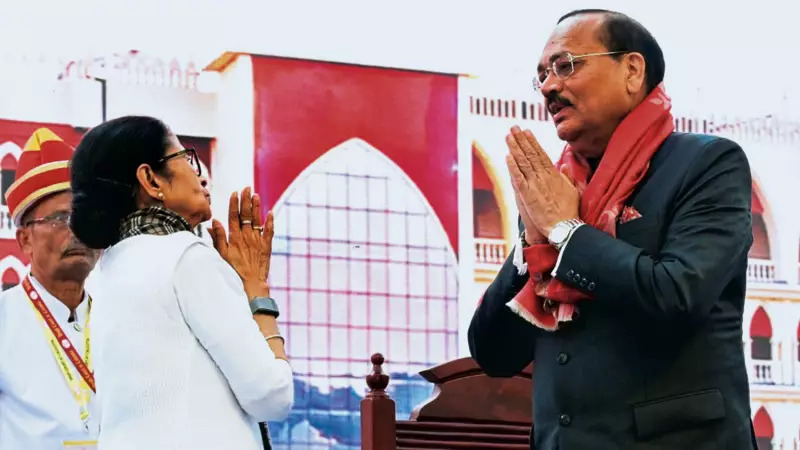
Mamata Banerjee Makes Urgent Appeal to Chief Justice of India
West Bengal Chief Minister Mamata Banerjee delivered a powerful appeal to Chief Justice of India Surya Kant on Saturday. She requested the judiciary to protect democracy and the Constitution from what she described as potential disaster.
Inauguration of Historic Court Building
The Chief Minister spoke during the inauguration ceremony for the new Jalpaiguri Circuit Bench building of the Calcutta High Court. She described this facility as a historic milestone for North Bengal. The impressive complex spans over forty acres and represents an investment exceeding five hundred crore rupees.
"I respectfully request the Chief Justice of India and all judges to protect our Constitution, democracy, judiciary, history, geography, and national borders from disaster," Banerjee stated clearly to the gathered audience.

Concerns About Media and Investigative Agencies
Banerjee expressed serious concerns about current practices affecting the justice system. She specifically criticized what she called media trials that occur before courts reach final verdicts. The Chief Minister emphasized that such practices have become tools to damage people's reputations unfairly.
"Investigative agencies should not deliberately attempt to defame citizens," she asserted firmly. "I say this not for myself but to save democracy, our people, the judiciary, and the Constitution. We remain under your guardianship, and nobody stands above you."
Significant Investment in Legal Infrastructure
The West Bengal government has made substantial investments in legal infrastructure according to Banerjee. She revealed that the state has already spent twelve hundred crore rupees on judicial facilities, excluding the newly inaugurated building. This expenditure occurred despite the central government stopping fund releases.
The new Jalpaiguri facility includes:
- Six modern courtrooms
- Eighty residential complexes for judges
- A special bungalow for the High Court Chief Justice
Banerjee proudly noted that this building surpasses even the main Calcutta High Court structure in quality and facilities.
Support for Legal System and Young Lawyers
The Chief Minister highlighted several initiatives to strengthen the justice system. West Bengal has established eighty-eight fast-track courts with specific focuses:
- Fifty-two courts dedicated to women's cases
- Seven POCSO courts for child protection cases
- Four labor courts
- Nineteen human rights courts
Additionally, the state government allocated fourteen acres of prime land in Rajarhat New Town for a new legal academy. Banerjee also appealed for better support for junior lawyers who struggle without proper benefits.
Call for Unity and Constitutional Protection
Banerjee emphasized the importance of national unity during her address. "There should be no discrimination based on caste, creed, or religion," she declared. "Let us work together and speak for unity."
She identified four vital pillars of the nation that must remain strong and untarnished:
- The Constitution of India
- The country's citizens
- The judiciary system
- The media
The Chief Minister urged the judiciary to act as a protective barrier against what she perceives as erosion of constitutional values.
Practical Benefits for North Bengal Residents
The new circuit bench building brings practical advantages for people in North Bengal. Residents will no longer need to travel to Kolkata for High Court matters. This development significantly improves access to justice for people in the region.
Several dignitaries attended the inauguration ceremony alongside CJI Surya Kant and Chief Minister Banerjee. These included Calcutta High Court Chief Justice Sujoy Paul, former Supreme Court judges, West Bengal Advocate General Kishore Datta, and state Law Minister Moloy Ghatak.
The event marked both a celebration of improved judicial infrastructure and a serious discussion about protecting democratic institutions in contemporary India.