

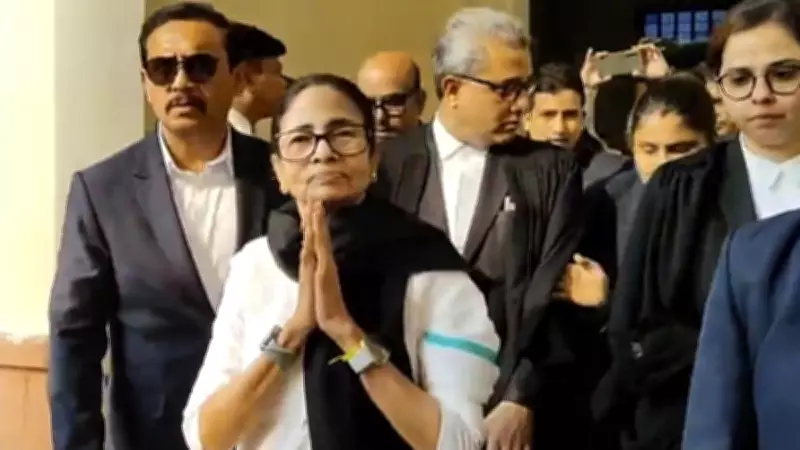
West Bengal Chief Minister Mamata Banerjee Argues Case in Supreme Court Over Electoral Roll Revision
The Supreme Court of India has taken up a significant case concerning electoral processes in West Bengal, with Chief Minister Mamata Banerjee personally presenting arguments before the bench. The court, led by the Chief Justice of India, was hearing petitions that challenge the ongoing Special Intensive Revision of electoral rolls in the state.
Supreme Court Issues Notice to Election Commission
During the proceedings, the Supreme Court issued a formal notice to the Election Commission of India, seeking its response to the petitions. This legal move underscores the judicial scrutiny over the electoral roll revision process, which has become a contentious issue in West Bengal's political landscape.
The petitions allege irregularities or concerns in the Special Intensive Revision, prompting the court to intervene. The issuance of notice indicates that the court is considering the merits of the case and requires the Election Commission to provide clarifications or justifications for its actions.

Mamata Banerjee's Stance: Fighting for a Larger Cause
In her arguments before the Supreme Court, Chief Minister Mamata Banerjee emphasized that she is fighting for a larger cause beyond immediate political interests. She framed the issue as one of democratic integrity and fairness in electoral processes, which are fundamental to India's constitutional framework.
Banerjee's direct involvement in the court proceedings highlights the high stakes involved, as the outcome could impact voter lists and potentially influence future elections in West Bengal. Her advocacy in the Supreme Court reflects a broader effort to ensure transparency and accountability in electoral management.
Background on Special Intensive Revision of Electoral Rolls
The Special Intensive Revision of electoral rolls in West Bengal is a process initiated to update and verify voter lists, but it has sparked legal challenges. Petitioners argue that the revision may be flawed or biased, raising questions about its implementation and effects on democratic participation.
This case comes at a critical time, as electoral rolls are essential for free and fair elections, and any discrepancies can lead to disputes and undermine public trust. The Supreme Court's involvement aims to address these concerns through a judicial review.
Implications and Next Steps
The Supreme Court's notice to the Election Commission sets the stage for further legal proceedings, where both sides will present detailed arguments. The court's eventual decision could have far-reaching consequences for electoral practices not only in West Bengal but potentially across India.
As the case progresses, it will be closely watched by political observers, legal experts, and the public, given its implications for democracy and governance. The involvement of a sitting chief minister in such a legal battle adds a unique dimension to the ongoing discourse on electoral integrity.






