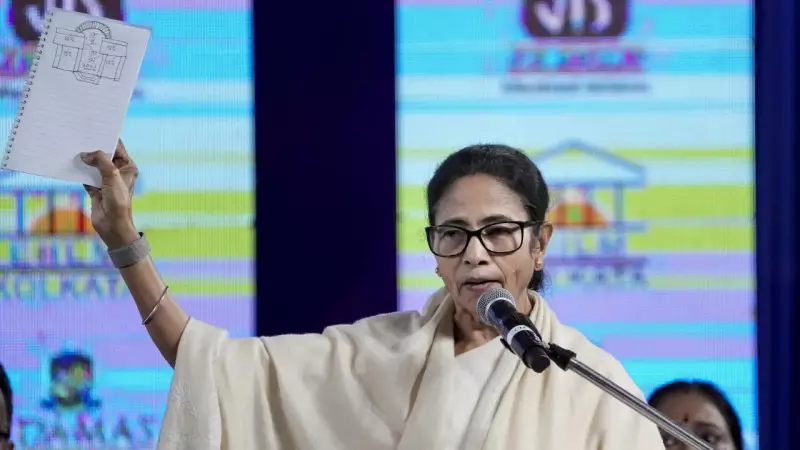
West Bengal Chief Minister Mamata Banerjee launched a scathing attack on the Election Commission of India (ECI) on Sunday, accusing the constitutional body of actively working to dismantle the foundations of Indian democracy while allegedly acting on behalf of the ruling Bharatiya Janata Party (BJP).
"Tragic Farce" of National Voters' Day
In a strongly worded social media post on platform X, Banerjee described the Election Commission's celebration of National Voters' Day as nothing short of a "tragic farce." The Trinamool Congress leader expressed profound distress and disturbance over what she characterized as the poll body's conduct, which she claims contradicts the very spirit of democratic participation.
"The Election Commission of India is celebrating National Voters' Day today, and what a tragic farce that is!" Banerjee wrote. "The Commission—working as His Master's Voice—is busy now in snatching away people's voting rights, and they have the temerity to celebrate Voters' Day!"

Unprecedented Harassment Allegations
Banerjee further escalated her criticism by alleging that the Election Commission is "torturing people in an unprecedented manner" at the behest of its "political masters." She claimed that instead of adhering to Supreme Court directives and established norms to safeguard democratic voting rights, the ECI is inventing new pretexts under the guise of addressing logical discrepancies.
"On behalf of BJP, their Master, they are busy in bulldozing the Opposition and destroying the foundation of Indian democracy, and yet they have the guts to celebrate Voters' Day!!" the West Bengal chief minister asserted in her post.
Human Cost of Electoral Revisions
The chief minister made startling claims about the human toll of the Election Commission's actions, stating that more than 130 people have died due to what she described as "tortures" inflicted by the poll body. She questioned the practicality and humanity of summoning elderly citizens above 85, 90, and even 95 years of age, along with physically challenged individuals, to physically appear before commission officials to verify their credentials.
"The stress caused by this kind of illegal pressure is leading to series of suicides and deaths, and yet you are continuing to do this at the behest of your political masters," Banerjee added. She went further to claim that the process has become akin to an "NRC trial for citizens," particularly affecting minority communities, scheduled castes, and scheduled tribes.
Context of Electoral Roll Revisions
Mamata Banerjee's outburst comes against the backdrop of ongoing concerns she has repeatedly voiced regarding the Special Intensive Revision of electoral rolls ahead of crucial assembly elections in West Bengal. The first phase of draft electoral rolls, published on December 16 last year, revealed a significant reduction in the state's electorate—from 7.66 crore to 7.08 crore voters, representing a deletion of over 58 lakh names statewide.
Official Rationale for Exclusions
According to Election Commission officials, the substantial exclusions observed during the first phase of revision were attributed to several legitimate factors including recorded deaths, permanent migration out of constituencies, duplication of entries in voter lists, and non-submission of required enumeration forms by eligible voters.
The poll panel has emphasized that voters identified as unmapped or containing discrepancies in their records are being provided adequate opportunities to be heard and rectify their status. The final electoral rolls for West Bengal are scheduled for publication on February 14, following completion of the revision process.
Broader Political Implications
This confrontation highlights the escalating tensions between opposition-ruled states and central institutions ahead of important electoral cycles. Banerjee's allegations touch upon fundamental questions about institutional independence, voter accessibility, and the integrity of electoral processes in India's federal democracy.

The West Bengal chief minister's statements reflect growing apprehensions among opposition parties about electoral mechanisms and their potential impact on democratic outcomes. As the state prepares for upcoming elections, these concerns about voter list revisions and their implementation continue to dominate political discourse in the region.