

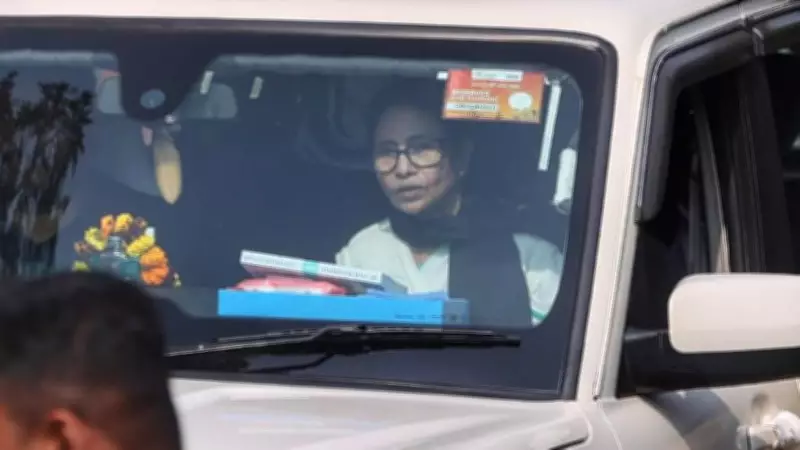
Mamata Banerjee's Dramatic Supreme Court Appearance: A Chief Minister Turns Advocate
In an unprecedented legal spectacle, West Bengal Chief Minister Mamata Banerjee personally presented arguments before the Supreme Court on Wednesday, challenging the Election Commission's Special Intensive Revision (SIR) of electoral rolls in her state. The Trinamool Congress (TMC) chief, who holds a law degree from a Kolkata college, appeared before a Bench led by Chief Justice of India Surya Kant, flanked by senior advocate Shyam Divan and a team of lawyers.
The Five-Minute Plea That Became Fifteen
When Banerjee requested just five minutes to address the court, Chief Justice Surya Kant responded with judicial generosity: "We will allow you 15 minutes." The Chief Minister began her submission with folded hands, appealing to the judges to "save democracy" and alleging that West Bengal was being specifically targeted through the electoral revision process.
Tagore, Bonded Labour, and WhatsApp Commission: Mamata's Rhetorical Arsenal
Banerjee opened her arguments by quoting Nobel laureate Rabindranath Tagore, stating: "Our lawyers fight for justice from the beginning, but when we don't get justice, justice cries behind doors." She then made the striking declaration that she considered herself "a bonded labour" and "a very less important person from a common family," despite being a sitting chief minister.

The Bengal CM escalated her criticism of the Election Commission by labeling it a "WhatsApp Commission," alleging that micro observers deputed from BJP-ruled states were unilaterally striking off voters through informal channels. She claimed these observers, appointed only in Bengal, were overriding Booth Level Officers (BLOs) in what she described as an arbitrary process.
Allegations of Systematic Voter Deletion
Banerjee presented several specific allegations before the court:
- Approximately 58 lakh names had been deleted from West Bengal's electoral rolls
- The SIR process focused "only for deletion and not inclusion" of voters
- Married women were being removed from rolls due to surname changes after marriage
- A process normally taking two years was being completed in just three months
- More than 100 people had died during the SIR exercise, with several BLOs allegedly committing suicide
"Why is this not happening in Assam? Bengal is targeted," Banerjee questioned, drawing a comparison with the BJP-ruled neighboring state.
Confrontation Over Electoral Integrity
The hearing occurred against the backdrop of escalating tensions between the TMC government and the Election Commission. The state government maintains the SIR is being conducted in an "arbitrary and hurried" manner ahead of crucial Assembly elections, where Banerjee seeks a fourth consecutive term. The EC, however, has consistently defended the exercise as routine maintenance aimed at ensuring clean electoral rolls.
Banerjee informed the court that despite writing six letters to Chief Election Commissioner Gyanesh Kumar, she had received no response to her concerns about the revision process.
Judicial Response and Political Aftermath
The Supreme Court issued notice to the Election Commission on Banerjee's plea and listed the matter for further hearing next week. The Bench directed the EC and West Bengal's Chief Electoral Officer to file replies by February 9.
Following the proceedings, the TMC declared a major victory, stating in a social media post: "BIG WIN for Hon'ble Chief Minister Mamata Banerjee in the Hon'ble Supreme Court... The Court also made it clear that Micro Observers may not be required." The party highlighted that Banerjee had "wore the lawyer's coat, argued with facts, and forced accountability" during her court appearance.
In a notable concession, Banerjee thanked the court for allowing Aadhaar cards and other documents to be considered during the SIR process, calling this a relief for ordinary voters who might otherwise face exclusion from electoral participation.






