

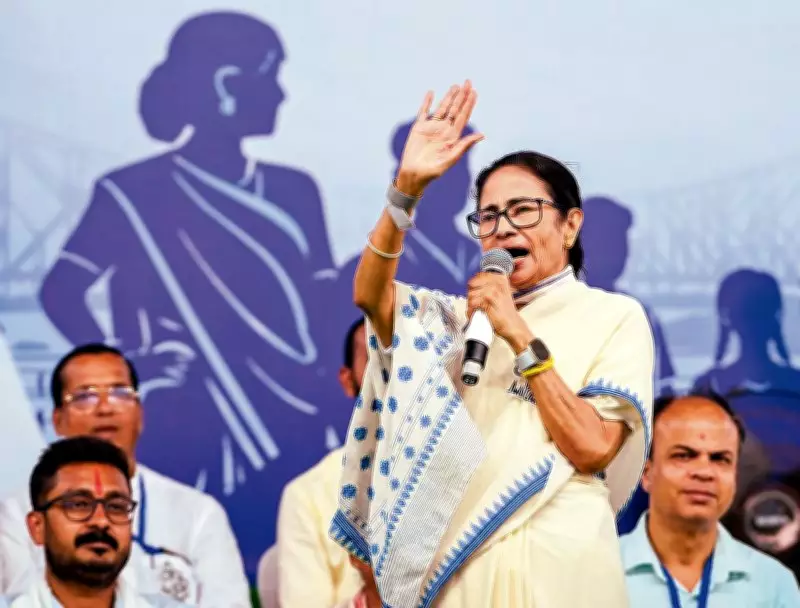
Mamata Banerjee Accuses Government of Conspiracy in Linking Key Bills
West Bengal Chief Minister Mamata Banerjee has launched a sharp attack on the central government, alleging a deep-seated conspiracy in its approach to two critical pieces of legislation. She claims that linking the bills for amending the women's reservation law and the delimitation exercise is a deliberate ploy with sinister motives.
Allegations of Voter Deletion and Delayed Implementation
Banerjee asserted that this linkage is not a coincidence but a calculated strategy. The primary aim, according to her, is to facilitate the deletion of voters' names from electoral rolls, which could disenfranchise a significant portion of the population. Furthermore, she argued that this move is designed to indefinitely postpone the implementation of the women's quota in legislatures, undermining the long-awaited push for gender parity in political representation.
"This is a conspiracy to delete voters' names and delay women's reservation," Banerjee stated emphatically, highlighting her concerns about the potential erosion of democratic rights and the stalling of progressive reforms.

Context of the Women's Reservation and Delimitation Bills
The women's reservation bill, which seeks to reserve one-third of seats in the Lok Sabha and state assemblies for women, has been a contentious issue for decades, with debates over its implementation timeline. The delimitation bill involves the redrawing of parliamentary and assembly constituencies based on the latest census data, a process that can significantly alter political landscapes.
By connecting these two bills, Banerjee suggests that the government is creating a procedural labyrinth. She fears that tying the women's quota to the completion of delimitation—a process that could take years—will effectively push the reservation into a distant future, denying women their rightful place in politics for the foreseeable term.
Political Implications and Broader Concerns
Banerjee's allegations come at a time of heightened political tensions, with opposition parties scrutinizing the government's legislative agenda. Her statements resonate with broader anxieties about electoral integrity and the pace of social reforms. Critics have long warned about the risks of voter list manipulations and the delays in enacting the women's reservation, making her claims particularly pointed.
In her critique, Banerjee emphasized that such tactics could undermine public trust in democratic institutions. "Linking these bills is a way to sabotage both processes," she remarked, urging for a clear and separate pathway to ensure the women's quota is implemented without unnecessary delays tied to delimitation exercises.
Call for Transparency and Action
The West Bengal leader called for greater transparency from the government regarding its plans for these bills. She demanded that the women's reservation be enacted independently and expedited, without being held hostage to the delimitation process. Her allegations have sparked discussions among political analysts and activists, who are now closely monitoring how the government responds to these serious charges.
As the debate unfolds, Banerjee's accusations highlight the ongoing struggles over electoral reforms and gender equality in Indian politics. The outcome could have lasting implications for voter rights and the representation of women in the country's highest legislative bodies.






