

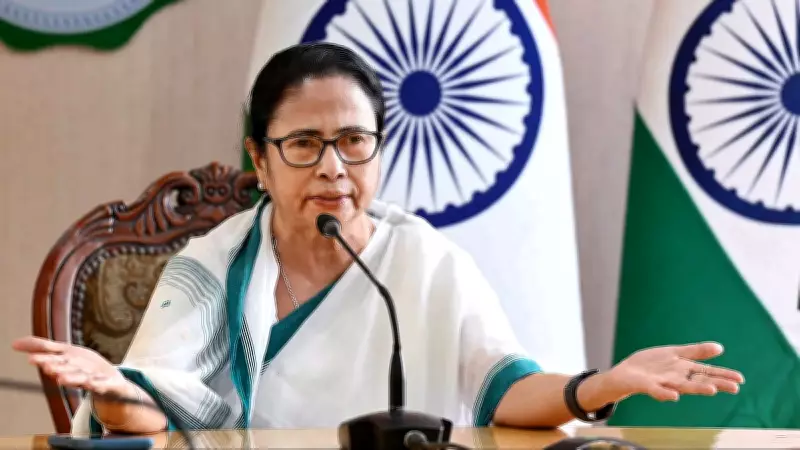
Mamata Banerjee Calls for Prime Minister's Resignation Amid Pakistan's Kolkata Strike Warning
West Bengal Chief Minister Mamata Banerjee has issued a sharp demand for Prime Minister Narendra Modi's resignation, citing his alleged silence on a provocative statement from Pakistan's Defence Minister. The political firestorm erupted after Khawaja Asif, Pakistan's Defence Minister, explicitly warned India on Saturday that Pakistan would retaliate with a strike targeting Kolkata in response to any "future misadventures" by India.
Escalating Tensions and Political Fallout
The controversial remarks from Pakistan's Defence Minister have ignited a fierce debate in Indian political circles, with Mamata Banerjee leading the charge against the central government. In a strongly worded statement, Banerjee accused the Prime Minister of failing to protect national security and sovereignty by not immediately condemning the threat against Kolkata, a major metropolitan hub in eastern India.
"The Prime Minister's silence on this grave threat to our beloved Kolkata is unacceptable and demonstrates a failure of leadership," Banerjee declared. "He must resign immediately for compromising the safety of millions of Indians."

Details of Pakistan's Provocative Statement
According to reports, Khawaja Asif made the statement during a media interaction on Saturday, where he outlined Pakistan's potential response strategies in hypothetical future conflicts with India. The specific mention of Kolkata as a target has raised alarms, given the city's strategic and economic significance.
The threat comes amid ongoing diplomatic strains between India and Pakistan, with historical conflicts and recent skirmishes contributing to a volatile bilateral relationship. Analysts suggest that such statements are intended to signal Pakistan's military readiness and deter Indian actions, but they also risk escalating tensions unnecessarily.
Broader Implications for National Security and Politics
Banerjee's demand has added a new dimension to the domestic political landscape, potentially influencing upcoming electoral dynamics in West Bengal and beyond. Her criticism focuses on several key points:
- The perceived lack of a robust governmental response to external threats.
- Concerns over the security of eastern India, particularly urban centers like Kolkata.
- The need for stronger diplomatic and military posturing to safeguard national interests.
Opposition parties have largely echoed Banerjee's concerns, calling for a unified national stance against Pakistan's aggression. Meanwhile, government supporters argue that the administration is handling the situation through appropriate channels, emphasizing back-channel diplomacy and strategic restraint.
Looking Ahead: Security and Diplomatic Measures
As the controversy unfolds, security agencies are reportedly assessing the potential risks to Kolkata and enhancing protective measures. The Indian government is expected to issue a formal response, though details remain undisclosed at this time.
This incident underscores the fragile state of India-Pakistan relations and highlights how external threats can quickly become focal points in domestic political discourse. With Banerjee's resignation demand, the pressure is mounting on the Prime Minister to address the issue publicly and reassure citizens of their safety.






