West Bengal Chief Minister Mamata Banerjee has escalated her confrontation with the Election Commission of India by approaching the Supreme Court against the ongoing Special Intensive Revision (SIR) of electoral rolls in the state. The Trinamool Congress supremo filed a plea on January 28, targeting both the Election Commission and the state Chief Electoral Officer, as she prepares to lead a delegation to meet Chief Election Commissioner Gyanesh Kumar in New Delhi today.
Legal Battle Intensifies Over Electoral Roll Revision
The Supreme Court petition comes at a critical juncture, just days after the court declined to extend the deadline for filing claims and objections for the SIR exercise in West Bengal. This legal move represents the culmination of nearly a month of escalating tensions, during which Banerjee had publicly declared her intention to approach the highest court "as an ordinary citizen" to safeguard democratic rights.
Accusations of Political Manipulation
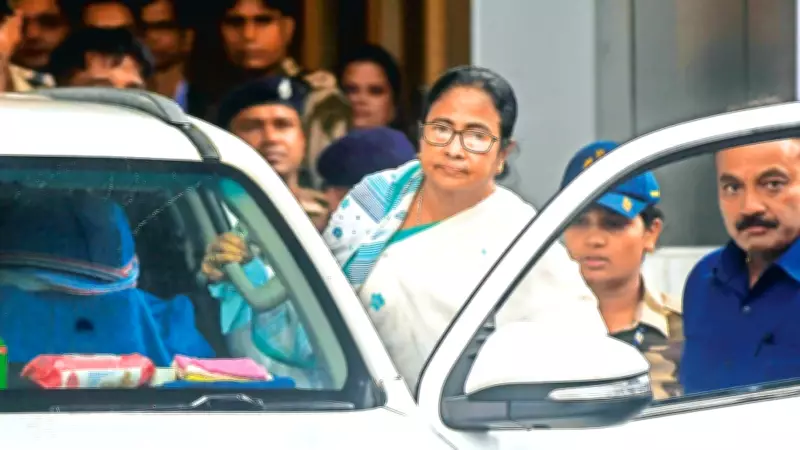
Before departing from Kolkata airport for Delhi on Sunday, the West Bengal chief minister launched a scathing attack on the Bharatiya Janata Party, accusing them of weaponizing the SIR exercise for electoral advantage. "They know they will lose in Bengal. That's why they are using SIR," Banerjee told reporters, challenging the BJP to "contest politically and democratically instead of using the Election Commission and the agencies against the election."

The TMC leader claimed that similar practices had influenced electoral outcomes in other states, suggesting a pattern of institutional manipulation. Her allegations reflect deepening concerns about the integrity of electoral processes ahead of crucial assembly polls.
Grassroots Concerns and Democratic Rights
At a recent Gangasagar rally in South 24 Parganas district, Banerjee had outlined her determination to represent ordinary citizens before the Supreme Court. "If necessary, I will go to the Supreme Court and plead for the people. I will speak for the people," she declared, emphasizing her intention to appear not as a lawyer but as a concerned citizen.
The chief minister promised to "show clearly what is happening at the grassroots level, what is happening on the ground, and how people are being harassed" through the SIR exercise. This commitment to highlighting ground realities underscores the political significance of the electoral roll revision process.
Sustained Opposition Through Official Channels
Banerjee's Supreme Court petition follows an extensive correspondence campaign with election authorities. The TMC leader has written approximately half a dozen letters to the Chief Election Commissioner regarding the SIR exercise, consistently characterizing it as a "farce" and a form of harassment targeting ordinary citizens.
These repeated communications demonstrate a systematic effort to challenge the electoral roll revision through multiple institutional avenues, combining legal action with direct engagement with election officials.
The timing of these developments is particularly significant, occurring against the backdrop of intensifying political competition in West Bengal. As Banerjee prepares for her meeting with the Chief Election Commissioner today, the outcome of both her legal challenge and her diplomatic engagement could have substantial implications for electoral processes and political dynamics in the state.