Mamata Banerjee Confronts Modi and Shah Over Uniform Civil Code in Bengal Polls
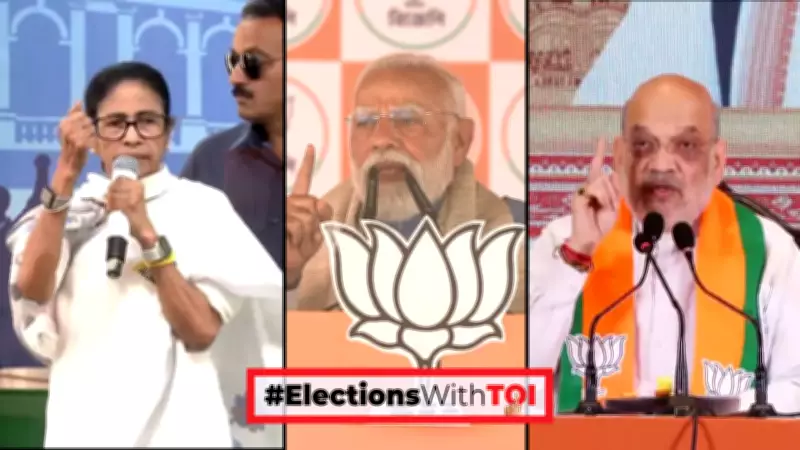
The political atmosphere in West Bengal has reached a boiling point as Chief Minister Mamata Banerjee engages in a direct and fiery confrontation with Prime Minister Narendra Modi and Home Minister Amit Shah over the contentious issue of the Uniform Civil Code (UCC). This debate has rapidly evolved into the central theme of the state's election campaign, with both sides presenting starkly contrasting visions for governance and identity.
Mamata Banerjee's Fierce Opposition to UCC
Mamata Banerjee, the leader of the Trinamool Congress, has launched a vehement attack against the Bharatiya Janata Party's electoral promise to implement a Uniform Civil Code. She has characterized this proposal as a dangerous move that could systematically strip away the fundamental rights of citizens. Banerjee argues that imposing uniformity across diverse communities would come at the unacceptable cost of eroding India's rich cultural and religious diversity.
In her campaign speeches, she has accused the BJP of advocating for a rigid one-policy system that fundamentally undermines democratic choice and pluralism. She frames the UCC as not merely a legal change but as an assault on the very fabric of democratic decision-making, where individual and community rights are paramount.

Modi and Shah's Strong Defense of Uniform Civil Code
On the opposing front, Prime Minister Narendra Modi and Home Minister Amit Shah have reinforced their commitment to the Uniform Civil Code, presenting it as an essential and long-overdue reform. They argue that the UCC is a necessary step to dismantle what they describe as decades of appeasement politics and to establish a framework of equal laws for every citizen, irrespective of religion.
The BJP leaders have positioned the UCC as a cornerstone of their vision for a modern, equitable India, where legal uniformity ensures justice and national integration. Their narrative emphasizes that ending special provisions based on religion is crucial for fostering true equality and unity across the nation.
UCC Emerges as Central Election Issue in Bengal
This sharp ideological clash has transformed the Uniform Civil Code from a peripheral policy discussion into the dominant issue of the West Bengal election campaign. Both political camps are meticulously sharpening their narratives to appeal to voters, turning the debate into a referendum on broader governance principles.
For the electorate, the controversy extends far beyond a simple policy debate. It has escalated into a profound question concerning the future direction of the state, touching on core issues of identity, rights, and the model of governance that will shape West Bengal in the coming years. The outcome of this electoral battle could have significant implications for the national discourse on secularism and uniform laws.
The intensifying campaign rhetoric suggests that voters are being presented with a clear choice between two competing ideologies: one championing diversity and decentralized rights, and the other advocating for uniformity and centralized legal equality. As the election date approaches, the debate over the Uniform Civil Code is expected to dominate headlines and influence voter sentiment across West Bengal.