

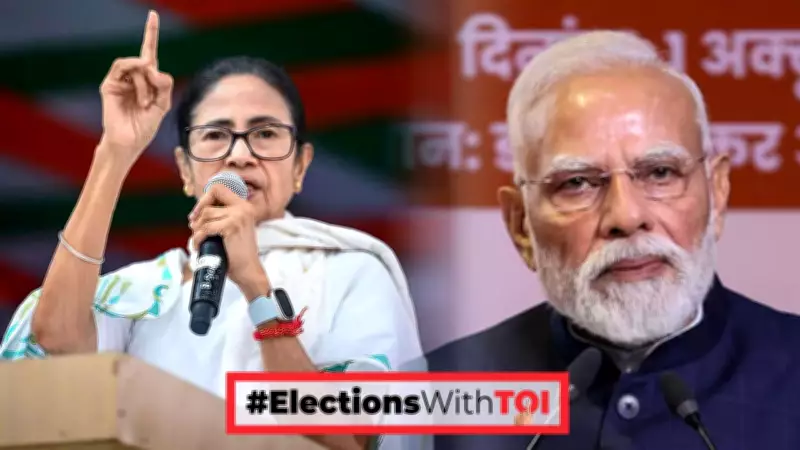
Mamata Banerjee's 'Another Pahalgam' Remark Ignites Major Political Firestorm in West Bengal
A significant political controversy has erupted across West Bengal following provocative comments made by Chief Minister Mamata Banerjee during a recent public rally. The Trinamool Congress leader questioned whether the Bharatiya Janata Party has developed a "blueprint ready" for orchestrating another Pahalgam-like terrorist attack in the crucial period leading up to the upcoming elections.
Rally Remarks That Sparked the Controversy
Speaking at a political gathering in Nadia district, Chief Minister Banerjee made several inflammatory statements that have since dominated political discourse across the state. Beyond her comments about potential Pahalgam-style attacks, the veteran politician also expressed serious concerns regarding a reported threat allegedly made by Pakistan's Defence Minister. Furthermore, she launched a direct criticism of Prime Minister Narendra Modi's response to these security matters, accusing his administration of inadequate handling of national security threats.
BJP's Forceful Response and Counter-Accusations
The Bharatiya Janata Party responded swiftly and forcefully to Banerjee's remarks, issuing a strong condemnation of what they characterized as irresponsible political rhetoric. Senior BJP leaders accused the Trinamool Congress of engaging in blatant appeasement politics and dangerously trivializing the memory of a deadly terrorist attack that claimed numerous innocent lives. The party's official statement emphasized that such comments undermine national security consensus and represent a new low in political discourse.

Escalating Tensions in Election Season
With crucial elections approaching in West Bengal, this controversy has dramatically escalated existing tensions between the two major political parties. The exchange has effectively brought issues of national security and political rhetoric to the very forefront of Bengal's electoral discourse. Political analysts suggest this development could significantly influence voter sentiment and campaign strategies in the coming weeks, potentially reshaping the political landscape of the state.
Broader Implications for Political Discourse
This incident highlights the increasingly polarized nature of political dialogue in West Bengal, where national security concerns are becoming central campaign issues. The controversy raises important questions about the boundaries of political rhetoric during election seasons and how security matters should be discussed in public forums. As both parties dig in their positions, the political temperature continues to rise across the state, with neither side showing willingness to de-escalate the situation.
The timing of these remarks, coming just ahead of important elections, suggests this controversy will likely dominate political conversations for the foreseeable future. Observers note that such exchanges reflect deeper ideological divides between the parties regarding national security approaches and political strategy in sensitive border states like West Bengal.






